Featured Post

Amazon Banned My Book: This is My Response to Amazon

Logic is an enemy  and Truth is a menace. I am nothing more than a reminder to you that  you cannot destroy Truth by burnin...

20 November 2023

Many physicists assume we must live in a multiverse – but their basic maths may be wrong


One of the most startling scientific discoveries of recent decades is that physics appears to be fine-tuned for life. This means that for life to be possible, certain numbers in physics had to fall within a certain, very narrow range.

One of the examples of fine-tuning which has most baffled physicists is the strength of dark energy, the force that powers the accelerating expansion of the universe. If that force had been just a little stronger, matter couldn’t clump together. No two particles would have ever combined, meaning no stars, planets, or any kind of structural complexity, and therefore no life.

This is not how we expected science to turn out. It’s a bit like in the 16th century when we first started to get evidence that we weren’t in the centre of the universe. Many found it hard to accept that the picture of reality they’d got used to no longer explained the data.

I believe we’re in the same situation now with fine-tuning. We may one day be surprised that we ignored for so long what was lying in plain sight – that the universe favours the existence of life.

If that force had been significantly weaker, it would not have counteracted gravity. This means the universe would have collapsed back on itself within the first split-second – again meaning no stars or planets or life. To allow for the possibility of life, the strength of dark energy had to be, like Goldilocks’s porridge, “just right”.

This is just one example, and there are many others.

The most popular explanation for the fine-tuning of physics is that we live in one universe among a multiverse. If enough people buy lottery tickets, it becomes probable that somebody is going to have the right numbers to win. Likewise, if there are enough universes, with different numbers in their physics, it becomes likely that some universe is going to have the right numbers for life.

For a long time, this seemed to me the most plausible explanation of fine-tuning. However, experts in the mathematics of probability have identified the inference from fine-tuning to a multiverse as an instance of fallacious reasoning – something I explore in my new book, Why? The Purpose of the Universe. Specifically, the charge is that multiverse theorists commit what’s called the inverse gambler’s fallacy.

Suppose Betty is the only person playing in her local bingo hall one night, and in an incredible run of luck, all of her numbers come up in the first minute. Betty thinks to herself: “Wow, there must be lots of people playing bingo in other bingo halls tonight!” Her reasoning is: if there are lots of people playing throughout the country, then it’s not so improbable that somebody would get all their numbers called out in the first minute.

But this is an instance of the inverse gambler’s fallacy. No matter how many people are or are not playing in other bingo halls throughout the land, probability theory says it is no more likely that Betty herself would have such a run of luck.

It’s like playing dice. If we get several sixes in a row, we wrongly assume that we are less likely to get sixes in the next few throws. And if we don’t get any sixes for a while, we wrongly assume that there must have been loads of sixes in the past. But in reality, each throw has an exact and equal probability of one in six of getting a specific number.

Multiverse theorists commit the same fallacy. They think: “Wow, how improbable that our universe has the right numbers for life; there must be many other universes out there with the wrong numbers!” But this is just like Betty thinking she can explain her run of luck in terms of other people playing bingo. When this particular universe was created, as in a die throw, it still had a specific, low chance of getting the right numbers.

Either it’s an incredible fluke that our universe happened to have the right numbers. Or the numbers are as they are because nature is somehow driven or directed to develop complexity and life by some invisible, inbuilt principle.

At this point, multiverse theorists bring in the “anthropic principle” – that because we exist, we could not have observed a universe incompatible with life. But that doesn’t mean such other universes don’t exist.

Suppose there is a deranged sniper hiding in the back of the bingo hall, waiting to shoot Betty the moment a number comes up that’s not on her bingo card. Now the situation is analogous to real world fine-tuning: Betty could not have observed anything other than the right numbers to win, just as we couldn’t have observed a universe with the wrong numbers for life.

Even so, Betty would be wrong to infer that many people are playing bingo. Likewise, multiverse theorists are wrong to infer from fine-tuning to many universes.

What about the multiverse?

Isn’t there scientific evidence for a multiverse though? Yes and no. In my book, I explore the connections between the inverse gambler’s fallacy and the scientific case for the multiverse, something which surprisingly hasn’t been done before.

The scientific theory of inflation – the idea that the early universe blew up hugely in size – supports the multiverse. If inflation can happen once, it is likely to be happening in different areas of space – creating universes in their own right. While this may give us tentative evidence for some kind of multiverse, there is no evidence that the different universes have different numbers in their local physics.

There is a deeper reason why the multiverse explanation fails. Probabilistic reasoning is governed by a principle known as the requirement of total evidence, which obliges us to work with the most specific evidence we have available.

In terms of fine-tuning, the most specific evidence that people who believe in the multiverse have is not merely that a universe is fine-tuned, but that this universe is fine-tuned. If we hold that the constants of our universe were shaped by probabilistic processes – as multiverse explanations suggest – then it is incredibly unlikely that this specific universe, as opposed to some other among millions, would be fine-tuned. Once we correctly formulate the evidence, the theory fails to account for it.

The conventional scientific wisdom is that these numbers have remained fixed from the Big Bang onwards. If this is correct, then we face a choice. Either it’s an incredible fluke that our universe happened to have the right numbers. Or the numbers are as they are because nature is somehow driven or directed to develop complexity and life by some invisible, inbuilt principle. In my opinion, the first option is too improbable to take seriously. My book presents a theory of the second option – cosmic purpose – and discusses its implications for human meaning and purpose.

This is not how we expected science to turn out. It’s a bit like in the 16th century when we first started to get evidence that we weren’t in the centre of the universe. Many found it hard to accept that the picture of reality they’d got used to no longer explained the data.

I believe we’re in the same situation now with fine-tuning. We may one day be surprised that we ignored for so long what was lying in plain sight – that the universe favours the existence of life.

Ancient 'Large-Scale Structure' Discovered In Deep Space: Bio-cosmos

The "Cosmic Vine" is a massive structure in the cosmic web that links 20 galaxies in the early universe.

The universe is more connected than you might think: In recent years, scientists have used new tools and techniques to map the “cosmic web,” which is made up of intertwined strands of gas structures known as filaments that link galaxies. Now, a team of researchers have identified a new “large-scale structure” in the universe that they call the “Cosmic Vine.”

The researchers hail from numerous universities and institutions across Denmark, Chile, the U.K., and the Netherlands. They published a preprint of their work to the arXiv server on November 8. According to the study, the Cosmic Vine was spotted after poring over data collected by the James Webb Space Telescope (JWST), humanity’s most powerful tool for peering into the far reaches of space and time. 

According to the researchers, it is a massive “vine-like structure” that encompasses 20 galaxies and stretches for over 13 million light years. It’s also very ancient: The researchers pegged it at redshift 3.44, meaning it’s situated in the early universe. Redshift refers to the way light stretches as it travels longer distances through time, with higher redshifts indicating an object is older. A redshift of 3.44 would mean light from the Cosmic Vine has been traveling for between 11 and 12 billion years before reaching JWST. The universe is roughly 13 billion years old. 

The discovery is notable because it can teach us more about how galaxies form. Indeed, recent work on the cosmic web has revealed that filament structures are crucial for delivering the materials galaxies need to grow—a previously-discovered filament was referred to as a “pipeline” for fueling this type of growth by researchers. The researchers who identified the Cosmic Vine wrote that galaxy clusters are the “most massive gravitationally-bound structures in the universe” and that studying their progenitors “in the early Universe is fundamental for our understanding of galaxy formation and evolution.” So, characterizing the dynamics of the Cosmic Vine and the galaxies embedded within it could teach us a lot. 

However, the Cosmic Vine raises more questions than it answers. The researchers note that our snapshot of the Vine indicates it’s still in its growing phase, and yet it contains two massive galaxies that are quiescent, meaning they’ve stopped forming stars. These quiescent galaxies are not in the core of the developing cluster, which some theories have held is a requirement for star formation to be halted. “This discrepancy potentially poses a challenge to the models of massive cluster galaxy formation,” the authors wrote. “Future studies comparing a large sample with dedicated cluster simulations are required to solve the problem.”

“What is the culprit quenching their star-formations at so early cosmic time?” the authors ask. Observed features of the galaxies indicate that the culprit could be a starburst triggered by merging galaxies—this is when star formation occurs at a rapid rate that quickly depletes available resources. Another explanation may be due to feedback from a supermassive black hole embedded in one of the galaxies, known as an Active Galactic Nucleus, or AGN. 

Until more work is done, though, we simply don’t know the answer. As our knowledge grows, so do the universe’s many mysteries.

16 November 2023

NASA's James Webb telescope confirms planet formation theory: Evolutionary transubstantiation

"... the Creator waters His incipient sentience via cosmic life processes, and He seeds the universe with the raw materials needed to beget Life."
 

Scientists using NASA’s James Webb Space Telescope just made a breakthrough discovery in revealing how planets are made. By observing water vapor in protoplanetary disks, Webb confirmed a physical process involving the drifting of ice-coated solids from the outer regions of the disk into the rocky-planet zone.

Theories have long proposed that icy pebbles forming in the cold, outer regions of protoplanetary disks — the same area where comets originate in our solar system — should be the fundamental seeds of planet formation. The main requirement of these theories is that pebbles should drift inward toward the star due to friction in the gaseous disk, delivering both solids and water to planets.

A fundamental prediction of this theory is that as icy pebbles enter into the warmer region within the “snowline” — where ice transitions to vapor — they should release large amounts of cold-water vapor. This is exactly what Webb observed.

“Webb finally revealed the connection between water vapor in the inner disk and the drift of icy pebbles from the outer disk,” said principal investigator Andrea Banzatti of Texas State University, San Marcos, Texas. “This finding opens up exciting prospects for studying rocky planet formation with Webb!

“In the past, we had this very static picture of planet formation, almost like there were these isolated zones that planets formed out of,” explained team member Colette Salyk of Vassar College in Poughkeepsie, New York. “Now we actually have evidence that these zones can interact with each other. It’s also something that is proposed to have happened in our solar system.”

Planet-forming Disks


Artist’s Concept: This artist’s concept compares two types of typical, planet-forming disks around newborn, Sun-like stars. On the left is a compact disk, and on the right is an extended disk with gaps. Scientists using Webb recently studied four protoplanetary disks—two compact and two extended. The researchers designed their observations to test whether compact planet-forming disks have more water in their inner regions than extended planet-forming disks with gaps. This would happen if ice-covered pebbles in the compact disks drift more efficiently into the close-in regions nearer to the star and deliver large amounts of solids and water to the just-forming, rocky, inner planets. Current research proposes that large planets may cause rings of increased pressure, where pebbles tend to collect. As the pebbles drift, any time they encounter an increase in pressure, they tend to collect there. These pressure traps don’t necessarily shut down pebble drift, but they do impede it. This is what appears to be happening in the large disks with rings and gaps. This also could have been a role of Jupiter in our solar system — inhibiting pebbles and water delivery to our small, inner, and relatively water-poor rocky planets. [NASA, ESA, CSA, Joseph Olmsted (STScI)]

Harnessing the Power of Webb

The researchers used Webb’s MIRI (the Mid-Infrared Instrument) to study four disks — two compact and two extended — around Sun-like stars. All four of these stars are estimated to be between 2 and 3 million years old, just newborns in cosmic time.

The two compact disks are expected to experience efficient pebble drift, delivering pebbles to well within a distance equivalent to Neptune’s orbit. In contrast, the extended disks are expected to have their pebbles retained in multiple rings as far out as six times the orbit of Neptune.

The Webb observations were designed to determine whether compact disks have a higher water abundance in their inner, rocky planet region, as expected if pebble drift is more efficient and is delivering lots of solid mass and water to inner planets. The team chose to use MIRI’s MRS (the Medium-Resolution Spectrometer) because it is sensitive to water vapor in disks.

The results confirmed expectations by revealing excess cool water in the compact disks, compared with the large disks.

Water Abundance

As the pebbles drift, any time they encounter a pressure bump — an increase in pressure — they tend to collect there. These pressure traps don’t necessarily shut down pebble drift, but they do impede it. This is what appears to be happening in the large disks with rings and gaps.

Current research proposes that large planets may cause rings of increased pressure, where pebbles tend to collect. This also could have been a role of Jupiter in our solar system — inhibiting pebbles and water delivery to our small, inner, and relatively water-poor rocky planets.

Solving the Riddle

When the data first came in, the results were puzzling to the research team. “For two months, we were stuck on these preliminary results that were telling us that the compact disks had colder water, and the large disks had hotter water overall,” remembered Banzatti. “This made no sense, because we had selected a sample of stars with very similar temperatures.”

Only when Banzatti overlaid the data from the compact disks onto the data from the large disks did the answer clearly emerge: the compact disks have extra cool water just inside the snowline, at about ten times closer than the orbit of Neptune.

“Now we finally see unambiguously that it is the colder water that has an excess,” said Banzatti. “This is unprecedented and entirely due to Webb’s higher resolving power!”

Icy Pebble Drift

This graphic is an interpretation of data from Webb’s MIRI, the Mid-Infrared Instrument, which is sensitive to water vapor in disks. It shows the difference between pebble drift and water content in a compact disk versus an extended disk with rings and gaps. In the compact disk on the left, as the ice-covered pebbles drift inward toward the warmer region closer to the star, they are unimpeded. As they cross the snow line, their ice turns to vapor and provides a large amount of water to enrich the just-forming, rocky, inner planets. On the right is an extended disk with rings and gaps. As the ice-covered pebbles begin their journey inward, many become stopped by the gaps and trapped in the rings. Fewer icy pebbles are able to make it across the snow line to deliver water to the inner region of the disk. [(NASA, ESA, CSA, Joseph Olmsted (STScI)

The team’s results appear in the Nov. 8 edition of the Astrophysical Journal Letters.

----------------

30 October 2023

From Big Bang to Big Picture: A Comprehensive New View of All Objects in the Universe


The most comprehensive view of the history of the universe ever created has been produced by researchers at The Australian National University (ANU). The study also offers new ideas about how our universe may have started.

Lead author Honorary Associate Professor Charley Lineweaver from ANU said he set out wanting to understand where all the objects in the universe came from.

"When the universe began 13.8 billion years ago in a hot big bang, there were no objects like protons, atoms, people, planets, stars or galaxies. Now the universe is full of such objects," he said.

This plot suggests the universe may have started as an instanton, which has a specific size and mass, rather than a singularity, which is a hypothetical point of infinite density and temperature."

"The relatively simple answer to where they came from is that, as the universe cooled, all of these objects condensed out of a hot background."

To show this process in the simplest possible way, the researchers made two plots. The first shows temperature and density of the universe as it expanded and cooled. The second plots the mass and size of all objects in the universe.

The result is the most comprehensive chart ever created of all the objects in the universe. The study is published in the latest issue of the American Journal of Physics.

Co-author and former ANU research student Vihan Patel said the project raised some important questions.

"Parts of this plot are 'forbidden'—where objects cannot be denser than black holes, or are so small, quantum mechanics blurs the very nature of what it really means to be a singular object." Patel said.

The researchers say the boundaries of the plots and what lies beyond them are also a major mystery.

"At the smaller end, the place where quantum mechanics and general relativity meet is the smallest possible object—an instanton. This plot suggests the universe may have started as an instanton, which has a specific size and mass, rather than a singularity, which is a hypothetical point of infinite density and temperature," Patel said.

"On the larger end, the plot suggests that if there were nothing—a complete vacuum—beyond the observable universe, our universe would be a large, low density black hole. This is a little scary, but we have good reason to believe that's not the case."

-----------------------------------------------

Bonus video 1:

Full video here.

-----------------------------------------------

Bonus video 2:

16 October 2023

Nature’s missing evolutionary law identified


Darwin applied the theory of evolution to life on earth, but not to other massively complex systems like planets, stars, atoms and minerals. Now, an interdisciplinary group of researchers has identified a missing aspect of that theory that applies to essentially everything.

Their paper, “On the roles of function and selection in evolving systems,” published Oct. 16 in the Proceedings of the National Academy of Sciences, describes “a missing law of nature” that recognizes for the first time an important norm within the natural world’s workings.  The new law states that complex natural systems evolve to states of greater patterning, diversity and complexity.

“If increasing functionality of evolving physical and chemical systems is driven by a natural law, we might expect life to be a common outcome of planetary evolution.”

“This was a true collaboration between scientists and philosophers to address one of the most profound mysteries of the cosmos: why do complex systems, including life, evolve toward greater functional information over time?" said co-author Jonathan Lunine, the David C. Duncan Professor in the Physical Sciences and chair of astronomy in the College of Arts and Sciences.

The multi-disciplinary team included three philosophers of science, two astrobiologists, a data scientist, a mineralogist and a theoretical physicist, from the Carnegie Institution for Science, the California Institute of Technology and the University of Colorado, as well as Cornell. Carnegie scientist Michael L. Wong is first author; an astrobiologist, he and Lunine are working on a forthcoming second edition of Lunine’s textbook “Astrobiology: A Multidisciplinary Approach.”

The new work presents a modern addition to “macroscopic” laws of nature, which describe and explain phenomena experienced daily in the natural world. It postulates a “Law of Increasing Functional Information,” which states that a system will evolve “if many different configurations of the system undergo selection for one or more functions.”

This new law applies to systems that are formed from many different components, such as atoms, molecules or cells, that can be arranged and rearranged repeatedly, and are subject to natural processes that cause countless different arrangements to be formed — but in which only a small fraction of these configurations survive in a process called “selection for function.”   

Regardless of whether the system is living or nonliving, when a novel configuration works well and function improves, evolution occurs, say the researchers.

In the case of biology, Darwin equated function primarily with survival — the ability to live long enough to produce fertile offspring. The new study expands that perspective, noting that at least three kinds of function occur in nature. 

The most basic function is stability – stable arrangements of atoms or molecules are selected to continue.  Also chosen to persist are dynamic systems with ongoing supplies of energy. 

The third and most interesting function according to the researchers is “novelty” — the tendency of evolving systems to explore new configurations that sometimes lead to startling new behaviors or characteristics, like photosynthesis. 

The same sort of evolution happens in the mineral kingdom. The earliest minerals represent particularly stable arrangements of atoms. Those primordial minerals provided foundations for the next generations of minerals, which participated in life’s origins. The evolution of life and minerals are intertwined, as life uses minerals for shells, teeth, and bones.

In the case of stars, the paper notes that just two major elements – hydrogen and helium – formed the first stars shortly after the big bang. Those earliest stars used hydrogen and helium to make about 20 heavier chemical elements. And the next generation of stars built on that diversity to produce almost 100 more elements.

The research has implications for the search for life in the cosmos, said Lunine, a member of the Carl Sagan Institute. “If increasing functionality of evolving physical and chemical systems is driven by a natural law, we might expect life to be a common outcome of planetary evolution.”

---------

More here:

A paper published in the Proceedings of the National Academy of Sciences describes "a missing law of nature," recognizing for the first time an important norm within the natural world's workings.

In essence, the new law states that complex natural systems evolve to states of greater patterning, diversity, and complexity. In other words, evolution is not limited to life on Earth, it also occurs in other massively complex systems, from planets and stars to atoms, minerals, and more.

It was authored by a nine-member team— scientists from the Carnegie Institution for Science, the California Institute of Technology (Caltech) and Cornell University, and philosophers from the University of Colorado.

"Macroscopic" laws of nature describe and explain phenomena experienced daily in the natural world. Natural laws related to forces and motion, gravity, electromagnetism, and energy, for example, were described more than 150 years ago.

In the case of stars, the paper notes that just two major elements—hydrogen and helium—formed the first stars shortly after the big bang. Those earliest stars used hydrogen and helium to make about 20 heavier chemical elements. And the next generation of stars built on that diversity to produce almost 100 more elements.

"Charles Darwin eloquently articulated the way plants and animals evolve by natural selection, with many variations and traits of individuals and many different configurations," says co-author Robert M. Hazen of Carnegie Science, a leader of the research.

"We contend that Darwinian theory is just a very special, very important case within a far larger natural phenomenon. The notion that selection for function drives evolution applies equally to stars, atoms, minerals, and many other conceptually equivalent situations where many configurations are subjected to selective pressure."

The co-authors themselves represent a unique multi-disciplinary configuration: three philosophers of science, two astrobiologists, a data scientist, a mineralogist, and a theoretical physicist.

Dr. Wong said, "In this new paper, we consider evolution in the broadest sense—change over time—which subsumes Darwinian evolution based upon the particulars of 'descent with modification.'"

"The universe generates novel combinations of atoms, molecules, cells, etc. Those combinations that are stable and can go on to engender even more novelty will continue to evolve. This is what makes life the most striking example of evolution, but evolution is everywhere."

Among many implications, the paper offers:
  1. Understanding into how differing systems possess varying degrees to which they can continue to evolve. "Potential complexity" or "future complexity" have been proposed as metrics of how much more complex an evolving system might become.
  2. Insights into how the rate of evolution of some systems can be influenced artificially. The notion of functional information suggests that the rate of evolution in a system might be increased in at least three ways: (1) by increasing the number and/or diversity of interacting agents, (2) by increasing the number of different configurations of the system; and/or (3) by enhancing the selective pressure on the system (for example, in chemical systems by more frequent cycles of heating/cooling or wetting/drying).
  3. A deeper understanding of generative forces behind the creation and existence of complex phenomena in the universe, and the role of information in describing them.
  4. An understanding of life in the context of other complex evolving systems. Life shares certain conceptual equivalencies with other complex evolving systems, but the authors point to a future research direction, asking if there is something distinct about how life processes information on functionality (see also https://royalsocietypublishing.org/doi/10.1098/rsif.2022.0810).
  5. Aiding the search for life elsewhere: if there is a demarcation between life and non-life that has to do with selection for function, can we identify the "rules of life" that allow us to discriminate that biotic dividing line in astrobiological investigations? (See also "Did Life Exist on Mars? Other Planets? With AI's Help, We May Know Soon").
  6. At a time when evolving AI systems are an increasing concern, a predictive law of information that characterizes how both natural and symbolic systems evolve is especially welcome.
Laws of nature—motion, gravity, electromagnetism, thermodynamics—etc. codify the general behavior of various macroscopic natural systems across space and time.

The "law of increasing functional information" complements the 2nd law of thermodynamics, which states that the entropy (disorder) of an isolated system increases over time (and heat always flows from hotter to colder objects).

09 October 2023

AfD is now a ‘major all-German party’

Alternative für Deutschland comes second in Hesse and third in Bavaria as support spreads from east of country

Kate Connolly in Berlin / Mon 9 Oct 2023 10.38 EDT

The anti-immigration Alternative für Deutschland has declared itself a “major all-German party” after winning its biggest ever vote share in a western German state.

The AfD, once seen as a party most relevant to post-communist eastern states, won 18.4% of the vote on Sunday in the powerhouse state of Hesse, around Frankfurt, and came second only to the Christian Democratic Union (CDU). In Bavaria it came third, behind the rightwing populist Freie Wähler (Free Voters) party.

Alice Weidel, the co-leader of the AfD, said the gains were a breakthrough moment, showing that “AfD is no longer an eastern phenomenon, but has become a major all-German party. So we have arrived.”

The three parties that make up the coalition government of the chancellor, Olaf Scholz – his Social Democrats, the Greens and the pro-business FDP – received a drubbing in the two elections, with the FDP failing to get into parliament in Bavaria.

Political analysts and politicians themselves were quick to blame the actions of the central government for the poor showing, with dissatisfaction expressed over everything from its building heating reforms to the cost of living crisis and post-pandemic labour shortages.

The political future of Nancy Faeser, the interior minister who ran as the main candidate for the SPD in Hesse, was in doubt after the party’s dismal performance there, even as Scholz said he would stand behind her.

Around a quarter of all German voters live in Hesse and Bavaria.

In Bavaria, the Greens lost 3.2% of their previous vote share, the SPD 1.3% and the FDP 2.1%. In Hesse, the results were even worse, with the SPD losing 4.7%, the Greens 5%, and the FDP 2.5%.

In contrast, the AfD made a gain of 5.3% in Hesse, while in Bavaria it gained 4.4%, bringing it to 14.6%.

Manfred Güllner, the head of the Forsa polling institute, attributed the far right’s success to “the huge alienation between the governing parties in Berlin and the many normal working people”. The ruling administration ignored their concerns at their peril, he added.

In Bavaria, in particular, concerns over immigration played a considerable role in the way people voted, with 83% choosing parties promising a change in immigration and asylum policy. In polling, 21% of people in Bavaria said migration was the most important issue in deciding how they voted; and this was the case for 18% in Hesse.

Markus Söder, the head of the Christian Social Union, which has ruled in Bavaria for decades and secured the most votes, with 37% – albeit the party’s historically worst result – said voters had sent an “alarm signal” to Berlin. “The topic of migration is a purely federal issue, not a regional policy issue,” he said. He added the only way to halt the growth of the AfD was to “change Germany’s migration policy”.

More below:

The Alternative for Germany long seemed to be little more than a regional rump party, the voice of disgruntled voters in the former communist east but a political earthquake changed all that on Sunday night.

"Centrist politicians expressed dismay. Parts of the AfD have been designated extremist by German domestic intelligence and one of its leaders is to stand trial for using banned Nazi slogans. A former AfD MP was arrested last year over her role in an alleged plot by radicals to overthrow the national government.

"Yet none of that seems to be deterring voters, who are abandoning traditional parties in droves to put their crosses next to the AfD."

-------- 

"Exit polls on Sunday showed that 38 per cent of voters who chose the AfD did so out of conviction, not protest. In Bavaria the proportion was higher — 47 per cent. Voters from all other parties had defected to the AfD, Weidel said, proving “we have established ourselves in all sections of the electorate”.

Full article here.

Happy coincidence: October 9 is White Independence Day.

30 September 2023

Cosmic Web Lights Up In The Darkness Of Space

Keck Cosmic Web Imager Offers Best Glimpse Yet of the Filamentous Network That Connects Galaxies

Maunakea, HawaiÊ»i – Like rivers feeding oceans, streams of gas nourish galaxies throughout the cosmos. But these streams, which make up a part of the cosmic web, are very faint and hard to see. While astronomers have known about the cosmic web for decades, and even glimpsed the glow of its filaments around bright cosmic objects called quasars, they have not directly imaged the extended structure in the darkest portions of space—until now.

New results from the Keck Cosmic Web Imager, or KCWI, which was designed by Caltech’s Edward C. Stone Professor of Physics Christopher Martin and his team, are the first to show direct light emitted by the largest and most hidden portion of the cosmic web: the crisscrossing wispy filaments that stretch across the darkest corners of space between galaxies. The KCWI instrument is based at the W. M. Keck Observatory atop Maunakea in HawaiÊ»i.

“We chose the name Keck Cosmic Web Imager for our instrument because we were hoping it would directly detect the cosmic web,” says Martin, who is also the director of the Caltech Optical Observatories, which includes Caltech’s portion of Keck Observatory; other Keck Observatory partners are the University of California and NASA. “I’m very happy it worked out.”

Galaxies in our universe condense out of swirling clouds of gas. That gas then further condenses into stars that light up the galaxies, making them visible to telescopes in a range of wavelengths of light. Astronomers think that cold, dark filaments in deep space snake their way to the galaxies, supplying them with gas, which is fuel for making more stars. In 2015, Martin and his colleagues found “smoking-gun evidence,” as Martin describes it, for this so-called cold-flow model of galaxy formation: a long filament funneling gas into a large galaxy. For this work, they used a prototype instrument to KCWI, the Cosmic Web Imager, which was based at Caltech’s Palomar Observatory.

In that case, the filament was being lit up by a nearby quasar, the bright nucleus of a young galaxy. But most of the cosmic web lies in the desolate territory between galaxies and is hard to image.

“Before this latest finding, we saw the filamentary structures under the equivalent of a lamppost,” says Martin. “Now we can see them without a lamp.”

The new findings appear in a paper published in Nature Astronomy on September 28.

Martin has been driven to reveal the cosmic web in its full glory ever since he was a graduate student. This detailed imaging of the web, he says, will provide astronomers with missing information they need to understand the details of how galaxies form and evolve. It can also help astronomers map the distribution of dark matter in our universe (dark matter makes up about 85 percent of all matter in the universe, but scientists still don’t know what it is made of).

“The cosmic web delineates the architecture of our universe,” he says. “It’s where most of the normal, or baryonic, matter in our galaxy resides and directly traces the location of dark matter.”

The Glow of Filaments

The best way to see the cosmic web directly is to pick up signatures of its main component, hydrogen gas, using instruments called spectrometers, which spread light out into a multitude of wavelengths, also known as a spectrum. Hydrogen gas can be identified within these spectra via its strongest emission line, called the Lyman alpha line. Martin and his colleagues designed KCWI to find these faint Lyman alpha signatures across a two-dimensional (2D) image of the cosmos (hence KCWI is known as an imaging spectrometer). The instrument’s first installment covers the “blue” portion of the visible-light spectrum, spanning wavelength ranges from 350 to 560 nanometers. (The second part of the instrument, called the Keck Cosmic Reionization Mapper, or KCRM, which sees the red, or longer-wavelength portion, of the visible spectrum, was recently installed at Keck Observatory).

KCWI’s precise spectrometers can look for the Lyman alpha signatures of the cosmic web across a range of wavelengths. Because of the expansion of the universe, which stretches light to longer wavelengths, gas that is located farther away from Earth has a redder Lyman alpha signature. The 2D images captured by KCWI at each wavelength of light can be stacked together to make a three-dimensional (3D) map of the emission from the cosmic web. For this observation, KCWI observed a region of space between 10 and 12 billion light-years away.

“We are basically creating a 3D map of the cosmic web,” Martin explains. “We take spectra for every point in an image at range of wavelengths, and the wavelengths translate to distance.”

Confusion with the Diffuse Light of Space

One challenge in detecting the cosmic web is that its dim light can be confused with nearby background light that suffuses the skies above Maunakea, including the glow from the atmosphere, zodiacal light from the solar system (generated when sunlight scatters off interplanetary dust), and even our own galaxy’s light.

To solve this problem, Martin came up with a new strategy to subtract this background light from the images of interest.

“We look at two different patches of sky, A and B. The filament structures will be at distinct distances in the two directions in the patches, so you can take the background light from image B and subtract it from A, and vice versa, leaving just the structures. I ran detailed simulations of this in 2019 to convince myself that this method would work,” he says.

The result is that astronomers now have “a whole new way to study the universe,” as Martin says.

“With KCRM, the newly deployed red channel of KCWI, we can see even farther into the past,” says senior instrument scientist Mateusz Matuszewski. “We are very excited about what this new tool will help us learn about the more distant filaments and the era when the first stars and black holes formed.”

29 September 2023

Multicultural paradise almost achieved: Swedish PM vows to defeat gangs, seeks military help


Swedish PM calls in military to assist with gang violence

Sept. 29 (UPI) -- Swedish Prime Minister Ulf Kristersson called together the armed forces and police to tackle rising gang violence on Monday, blaming it on "failed integration."

Authorities pointed to 11 deaths over the past month connected to gang violence as a reason to take such measures. On Thursday, two men were shot in separate crimes near Stockholm while a 25-year-old woman was killed near Uppsala.

"We're going to hunt down the gangs and we're going to defeat them," Kristersson said during a nationally televised address Thursday evening. "It is a difficult time for Sweden."

"I cannot stress enough how serious the situation is," he said. "Sweden has never seen anything like this before. No other country in Europe sees anything like it."

He blamed the increase on "irresponsible immigration policy" and "failed integration," along with "political naivety," for the rise of gang violence, but said Sweden will now take a different approach to tackle the issue.

Sweden's armed forces chief Micael Byden said he is ready to help local police, but it is not clear how they would participate.

Kristersson's opponents have said that bringing in the military ignores tackling the root cause of the violence. Reports said the uptick in violence stems from the gang network Foxtrot breaking into two rival gangs after infighting.

Police said the violence also has its roots into the poor integration of immigrants, a widening gap between rich and poor, and drug use.

28 September 2023

Webb Discovers Methane, Carbon Dioxide in Atmosphere of K2-18 b


Webb Discovers Methane, Carbon Dioxide in Atmosphere of K2-18 b

A new investigation with NASA’s James Webb Space Telescope into K2-18 b, an exoplanet 8.6 times as massive as Earth, has revealed the presence of carbon-bearing molecules including methane and carbon dioxide. Webb’s discovery adds to recent studies suggesting that K2-18 b could be a Hycean exoplanet, one which has the potential to possess a hydrogen-rich atmosphere and a water ocean-covered surface.

The first insight into the atmospheric properties of this habitable-zone exoplanet came from observations with NASA’s Hubble Space Telescope, which prompted further studies that have since changed our understanding of the system.

K2-18 b orbits the cool dwarf star K2-18 in the habitable zone and lies 120 light-years from Earth in the constellation Leo. Exoplanets such as K2-18 b, which have sizes between those of Earth and Neptune, are unlike anything in our solar system. This lack of equivalent nearby planets means that these ‘sub-Neptunes’ are poorly understood, and the nature of their atmospheres is a matter of active debate among astronomers.

The suggestion that the sub-Neptune K2-18 b could be a Hycean exoplanet is intriguing, as some astronomers believe that these worlds are promising environments to search for evidence for life on exoplanets.

"Our findings underscore the importance of considering diverse habitable environments in the search for life elsewhere," explained Nikku Madhusudhan, an astronomer at the University of Cambridge and lead author of the paper announcing these results. "Traditionally, the search for life on exoplanets has focused primarily on smaller rocky planets, but the larger Hycean worlds are significantly more conducive to atmospheric observations."

The abundance of methane and carbon dioxide, and shortage of ammonia, support the hypothesis that there may be a water ocean underneath a hydrogen-rich atmosphere in K2-18 b. These initial Webb observations also provided a possible detection of a molecule called dimethyl sulfide (DMS). On Earth, this is only produced by life. The bulk of the DMS in Earth’s atmosphere is emitted from phytoplankton in marine environments.

The inference of DMS is less robust and requires further validation. “Upcoming Webb observations should be able to confirm if DMS is indeed present in the atmosphere of K2-18 b at significant levels,” explained Madhusudhan.

While K2-18 b lies in the habitable zone and is now known to harbor carbon-bearing molecules, this does not necessarily mean that the planet can support life. The planet's large size — with a radius 2.6 times the radius of Earth — means that the planet’s interior likely contains a large mantle of high-pressure ice, like Neptune, but with a thinner hydrogen-rich atmosphere and an ocean surface. Hycean worlds are predicted to have oceans of water. However, it is also possible that the ocean is too hot to be habitable or be liquid.

Our ultimate goal is the identification of life on a habitable exoplanet, which would transform our understanding of our place in the universe.

"Although this kind of planet does not exist in our solar system, sub-Neptunes are the most common type of planet known so far in the galaxy," explained team member Subhajit Sarkar of Cardiff University. “We have obtained the most detailed spectrum of a habitable-zone sub-Neptune to date, and this allowed us to work out the molecules that exist in its atmosphere.”

Characterizing the atmospheres of exoplanets like K2-18 b — meaning identifying their gases and physical conditions — is a very active area in astronomy. However, these planets are outshone — literally — by the glare of their much larger parent stars, which makes exploring exoplanet atmospheres particularly challenging.

The team sidestepped this challenge by analyzing light from K2-18 b's parent star as it passed through the exoplanet's atmosphere. K2-18 b is a transiting exoplanet, meaning that we can detect a drop in brightness as it passes across the face of its host star. This is how the exoplanet was first discovered in 2015 with NASA’s K2 mission. This means that during transits a tiny fraction of starlight will pass through the exoplanet's atmosphere before reaching telescopes like Webb. The starlight's passage through the exoplanet atmosphere leaves traces that astronomers can piece together to determine the gases of the exoplanet's atmosphere.

"This result was only possible because of the extended wavelength range and unprecedented sensitivity of Webb, which enabled robust detection of spectral features with just two transits," said Madhusudhan. "For comparison, one transit observation with Webb provided comparable precision to eight observations with Hubble conducted over a few years and in a relatively narrow wavelength range."

"These results are the product of just two observations of K2-18 b, with many more on the way,” explained team member Savvas Constantinou of the University of Cambridge. “This means our work here is but an early demonstration of what Webb can observe in habitable-zone exoplanets.”

The team’s results were accepted for publication in The Astrophysical Journal Letters.

The team now intends to conduct follow-up research with the telescope's MIRI (Mid-Infrared Instrument) spectrograph that they hope will further validate their findings and provide new insights into the environmental conditions on K2-18 b.

"Our ultimate goal is the identification of life on a habitable exoplanet, which would transform our understanding of our place in the universe," concluded Madhusudhan. "Our findings are a promising step towards a deeper understanding of Hycean worlds in this quest."

NASA’s Webb Finds Carbon Source on Surface of Jupiter’s Moon Europa


Carbon suggests favorable environment for life in subsurface ocean 

For as long as humans have gazed into the night sky, we have wondered about life beyond the Earth. Scientists now know that several places in our solar system might have conditions suitable for life. One of these is Jupiter’s moon Europa, a fascinating world with a salty, subsurface ocean of liquid water — possibly twice as much as in all of Earth’s oceans combined. However, scientists had not confirmed if Europa’s ocean contained biologically essential chemicals, particularly carbon, the universal building block for life as we know it. Now, using the James Webb Space Telescope, astronomers have found carbon on Europa’s surface, which likely originated in this ocean. The discovery signals a potentially habitable environment in the ocean of Europa.

Jupiter’s moon Europa is one of a handful of worlds in our solar system that could potentially harbor conditions suitable for life. Previous research has shown that beneath its water-ice crust lies a salty ocean of liquid water with a rocky seafloor. However, planetary scientists had not confirmed if that ocean contained the chemicals needed for life, particularly carbon. 

Astronomers using data from NASA’s James Webb Space Telescope have identified carbon dioxide in a specific region on the icy surface of Europa. Analysis indicates that this carbon likely originated in the subsurface ocean and was not delivered by meteorites or other external sources. Moreover, it was deposited on a geologically recent timescale. This discovery has important implications for the potential habitability of Europa’s ocean.

“On Earth, life likes chemical diversity – the more diversity, the better. We’re carbon-based life. Understanding the chemistry of Europa’s ocean will help us determine whether it’s hostile to life as we know it, or if it might be a good place for life,” said Geronimo Villanueva of NASA’s Goddard Space Flight Center in Greenbelt, Maryland, lead author of one of two independent papers describing the findings.

We now think that we have observational evidence that the carbon we see on Europa’s surface came from the ocean. That's not a trivial thing. Carbon is a biologically essential element,” added Samantha Trumbo of Cornell University in Ithaca, New York, lead author of the second paper analyzing these data.

NASA plans to launch its Europa Clipper spacecraft, which will perform dozens of close flybys of Europa to further investigate whether it could have conditions suitable for life, in October 2024.

A Surface-Ocean Connection

Webb finds that on Europa’s surface, carbon dioxide is most abundant in a region called Tara Regio – a geologically young area of generally resurfaced terrain known as “chaos terrain.” The surface ice has been disrupted, and there likely has been an exchange of material between the subsurface ocean and the icy surface.

“Previous observations from the Hubble Space Telescope show evidence for ocean-derived salt in Tara Regio,” explained Trumbo. “Now we’re seeing that carbon dioxide is heavily concentrated there as well. We think this implies that the carbon probably has its ultimate origin in the internal ocean.”

“Scientists are debating how much Europa’s ocean connects to its surface. I think that question has been a big driver of Europa exploration,” said Villanueva. “This suggests that we may be able to learn some basic things about the ocean’s composition even before we drill through the ice to get the full picture.”

Both teams identified the carbon dioxide using data from the integral field unit of Webb’s Near-Infrared Spectrograph (NIRSpec). This instrument mode provides spectra with a resolution of 200 x 200 miles (320 x 320 kilometers) on the surface of Europa, which has a diameter of 1,944 miles, allowing astronomers to determine where specific chemicals are located.

Carbon dioxide isn’t stable on Europa’s surface. Therefore, the scientists say it’s likely that it was supplied on a geologically recent timescale – a conclusion bolstered by its concentration in a region of young terrain.

“These observations only took a few minutes of the observatory’s time,” said Heidi Hammel of the Association of Universities for Research in Astronomy, a Webb interdisciplinary scientist leading Webb’s Cycle 1 Guaranteed Time Observations of the solar system. “Even with this short period of time, we were able to do really big science. This work gives a first hint of all the amazing solar system science we’ll be able to do with Webb.”

Searching for a Plume

Villanueva’s team also looked for evidence of a plume of water vapor erupting from Europa’s surface. Researchers using NASA’s Hubble Space Telescope reported tentative detections of plumes in 2013, 2016, and 2017. However, finding definitive proof has been difficult.

The new Webb data shows no evidence of plume activity, which allowed Villanueva’s team to set a strict upper limit on the rate of material potentially being ejected. The team stressed, however, that their non-detection does not rule out a plume. 

“There is always a possibility that these plumes are variable and that you can only see them at certain times. All we can say with 100% confidence is that we did not detect a plume at Europa when we made these observations with Webb,” said Hammel.

23 August 2023

This Molecule May Have Seeded Earth Life

A new finding boosts Panspermia, the theory that life on Earth originated in deep space.


Floating in the middle of our galaxy, near the center of the Milky Way, inside a cloud of gas that swirls at the temperature of 100 Kelvin or -279.67 Fahrenheit, a molecule essential to life on Earth has just been discovered. It sounds inconceivable that such a level of cosmic cold could harbor anything remotely related to a living organism—and yet it does. In fact, without this molecule, humans—and all other breathing, growing things on the planet—would not be possible.

The molecule, which scientists have been trying to detect in space for decades, is carbonic acid, a precursor to amino acids, the basic building blocks of proteins. Its chemical formula is H2CO3. Hardly a household name, carbonic acid nonetheless is key to our capacity to breathe: It ferrets carbon dioxide from our blood into our lungs, where it can be exhaled into the atmosphere. It also plays important roles in various geological processes on Earth. An excess of the molecule in the oceans can lead to ocean acidification. “So while it’s important to life itself, it’s even more important in several atmospheric and geological processes,” says Miguel Sanz-Novo at the Spanish Astrobiology Centre in Madrid. Sanz-Novo’s team confirmed the presence of carbonic acid in space for the first time, publishing their findings in a pre-peer review site called Arxiv.

The findings bolster Panspermia, the theory that life on Earth takes its origin from space and that our planet was “seeded” by various cosmic molecules that took a ride on meteors and meteorites, which later gave rise to organisms.

The discovery of carbonic acid in space certainly tells us that the chemical ingredients for life are present out there, in the gas that will form new stars and planetary systems,” says Víctor Rivilla, the primary investigator on the project. “So yes, they could have been incorporated into solar system objects such as comets and asteroids, which could have transported them to the early Earth, thus helping to cook the life recipe.”

Our planet may have been “seeded” by various cosmic molecules.

Carbonic acid belongs to a larger group of carboxylic acids. Its close cousins, formic acid and acetic acid, were first spotted in space in 1971 and 1997, respectively. Scientists suspect that H2CO3 exists in various astronomical environments such as the Galilean icy moons, Mercury’s north polar regions, or even on the surface or atmosphere of Mars—but its presence in space was harder to pinpoint. “This molecule was thought to exist in space somewhere, and now our investigation showed that it is in fact there,” says Sanz-Novo—in the gas from which new stars and planets will eventually form. Moreover, it seems to be quite abundant, Sanz-Novo adds.

Floating inside a cloud named G+0.693-0.027 about 100,000 light-years away from Earth, carbonic acid molecules weren’t easy to discern (researchers used spectroscopy to identify them). Inside that cloud, the molecule exists in a high-energy state, which allows it to do things that it could never do on Earth: For example, as it spins in this high-energy state, it emits photons—massless particles that comprise waves of electromagnetic radiation—with a set frequency. That frequency becomes its spectral fingerprint or a mugshot, explains Sanz-Novo. Detected by two telescopes, at IRAM and Yebes observatories in Spain, and printed on paper, the fingerprint looks almost like a QR code.

Even here on Earth, H2CO3 is not easy to study because in ambient settings of temperature and pressure it easily breaks apart into carbon dioxide and water. To obtain a spectral fingerprint of the molecule in the lab to compare to the telescope’s data, the team also had to get the molecule to a high-energy state so it would start spitting out photons.

The findings aren’t only interesting from the perspective of where life came from, Rivilla adds. They also hint that we may have cosmic neighbors—the comets and asteroids most certainly took the molecules to other planets where they could develop into other life forms. “We all want to know how life could have appeared on our planet—and also if it is or is not a unique event,” he says.

The findings add another piece to the puzzle of whether we are alone in the universe—or not.

More here.

14 August 2023

Cosmic teleology: webbed nexuses of holonic planes and dimensions > harmonic bio-immanence

Darwin didn't perceive the larger, all-encompassing order – the layered, nestled, hierarchical space-time matter-energy bioelectrical harmonic webbed nexuses of holonic planes and dimensions – via which the processes of evolution unfold, without which the processes of evolution could not engender ever more complex life, sentience, and consciousness: but for the proto-order somehow embedded in the Big Seed, blind, unguided evolutionism is incapable of producing anything other than entropic chaos. Evolution is more akin to cosmic / élan vital processes, initiated by whatever entity / force that begot the Big Seed; it is undeniable that the cosmos has gradually, incrementally, spontaneously self-organized – from the very small to the very large – and that mankind are teleologically unfolding parts of this gradual, spontaneous, incremental, punctuated, self-organized expansion.

--------------------------------------

--------------------------------------

--------------------------------------

The 13 scales that define our physical Universe

The visible Universe extends 46.1 billion light-years from us, while we've probed scales down to as small as ~10^-19 meters.

KEY TAKEAWAYS:

On the smallest of physical scales, we have the fundamental, elementary particles, which build up to assemble nuclei, atoms, molecules, and even larger structures. On larger scales, we have planets, stars, stellar systems, galaxies, clusters of galaxies, and vast voids between them, all contributing to the enormous cosmic web. Overall, there are many different scales to view the Universe on. Here's the grand cosmic tour, from the extremely tiny to the unfathomably large.

Our Universe spans from subatomic to cosmic scales. All told, 13 different scales are presently known.

--------------------------------------

1.) Fundamental, elementary particles. Down to 10-19 meters, these quanta have never been divided.


On the right, the gauge bosons, which mediate the three fundamental quantum forces of our Universe, are illustrated. There is only one photon to mediate the electromagnetic force, there are three bosons mediating the weak force, and eight mediating the strong force. This suggests that the Standard Model is a combination of three groups: U(1), SU(2), and SU(3), whose interactions and particles combine to make up everything known in existence. Each of the known fundamental particles can be no larger than about ~10^-19 meters.

--------------------------------------

2.) Nuclear scales. On femtometer (~10-15 m) scales, individual nucleons, composed of quarks and gluons, bind together.


The journey from macroscopic scales down to subatomic ones spans many orders of magnitude, but going down in small steps can make each new one more accessible from the previous one. Humans are made of organs, cells, organelles, molecules, atoms, then electrons and nuclei, then protons and neutrons, and then quarks and gluons inside of them. This is the limit to how far we’ve ever probed nature.

When two protons, each one made of three quarks held together by gluons, overlap, it’s possible that they can fuse together into a composite state dependent on their properties. The most common, stable possibility is to produce a deuteron, made of a proton and a neutron, which requires the emission of a neutrino, a positron, and possibly a photon as well.

--------------------------------------

3.) Atomic scales. Angstrom-sized (~10-10 m), atoms compose all matter on Earth.


Although you yourself are made of atoms, what you experience as “touch” doesn’t necessarily require another, external atom to come in actual overlapping contact with the atoms in your body. Simply getting close enough to exert a force is not only enough, it’s what most commonly occurs.

--------------------------------------

4.) Molecular scales. Nanometers (~10-9 m) and larger, molecules contain multiple atoms bound together.

Molecules, examples of particles of matter linked up into complex configurations, attain the shapes and structures that they do owing primarily to the electromagnetic forces that exist between their constituent atoms and electrons. The variety of structures that can be created is almost limitless.

--------------------------------------

5.) Microscopic scales. Below 0.0001 meters (human hair width), tools beyond human eyes are required.

This tunneling electron microscope image shows a few specimens of the cyanobacterium species Prochlorococcus marinus. Each one of these organisms is only about half a micron in size, but all together, cyanobacteria are largely responsible for the creation of Earth’s oxygen: both initially and largely even during the present day. Like all bacteria, their lifetime is much, much shorter than the lifetime of a human.

--------------------------------------

6.) Macroscopic scales. Our conventional perceptions extend from sub-millimeter to several kilometer scales.

In warm, shallow bodies of water, pink flamingos can often be found wading, preening, and searching for food. The lack of carotenoid pigments in their food supply, notable in some (but not all) of the flamingos shown here, causes many of these particular flamingos to be closer to a white color than a more stereotypical pink or red, but the behavior of standing on one foot instead of two does successfully cut their body heat loss nearly in half.

--------------------------------------

7.) Sub-planetary scales. Where gravity cannot defeat electromagnetism, free-floating bodies can reach several hundred kilometers.

This selection of asteroids and comets visited by spacecraft spans many orders of magnitude in size, from sub-kilometer bodies to objects more than 100 km on a side. However, none of these objects have enough mass to be pulled into a round shape. Gravitation can hold them together, but electromagnetic forces are primarily responsible for their shapes.

--------------------------------------

8.) Planetary scales. Spheroidal because of self-gravitation, planets are typically ~1000-200,000 kilometers across.

Now that Saturn has been imaged by JWST, the first “family portrait” of the gas giant worlds as seen by JWST’s eyes can be composed. Here, each planet is shown with an angular size that’s calibrated to how they would appear relative to one another as seen by JWST. Planets can be as large as about twice Jupiter’s size, but may be as small as 1000 km or even less.

--------------------------------------

9.) Star-sized scales. From 0.08-to-2000 times the Sun’s size, these nuclear furnaces light up the Universe.

Brown dwarfs, between about 0.013-0.080 solar masses, will fuse deuterium+deuterium into helium-3 or tritium, remaining at the same approximate size as Jupiter but achieving much greater masses. Red dwarfs are only slightly larger, but even the Sun-like star shown here is not shown to scale here; it would have about 7 times the diameter of a low-mass star. Stars can be up to nearly 2000 times the diameter of our Sun within this Universe.

--------------------------------------

10.) Stellar system scales. Extending up to ~2 light-years away, extended Oort-like clouds probe the limits of individual stellar systems.

An illustration of the inner and outer Oort Cloud surrounding our Sun. While the inner Oort Cloud is torus-shaped, the outer Oort Cloud is spherical. The true extent of the outer Oort Cloud may be under 1 light-year, or greater than 3 light-years; there is a tremendous uncertainty here. Any massive object that passes through the Oort cloud has a significant chance of perturbing the objects within its vicinity.

--------------------------------------

11.) Galactic scales. From ~100-to-1,000,000 light-years, normal and dark matter hold galaxies together.

While there are many instances of numerous galaxies in the same region of space, they normally occur either between two galaxies only or in very dense regions of space, like at the centers of galaxy clusters. Seeing 5 galaxies interacting within a space of less than 1 million light-years is an extreme rarity, captured in gorgeous detail by Hubble here. As all of these galaxies are still forming new stars, they’re all classified as “alive” by astronomers.

--------------------------------------

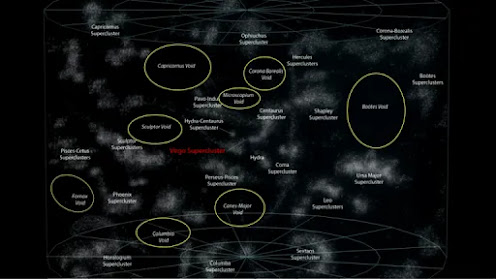
12.) Cluster-and-void scales. 10-to-100 million light-years wide, they’re the largest gravitationally bound structures.

In between the great clusters and filaments of the Universe are great cosmic voids, some of which can span hundreds of millions of light-years in diameter. While some voids are larger in extent than others, spanning a billion light-years or more, they all contain matter at some level. Even the void that houses MCG+01–02–015, the loneliest galaxy in the Universe, likely contains small, low surface brightness galaxies that are below the present detection limit of telescopes like Hubble.

--------------------------------------

13.) Truly cosmic scales. The fully observable cosmic web extends ~92 billion light-years across.

On the largest scales, the way galaxies cluster together observationally (blue and purple) cannot be matched by simulations (red) unless dark matter is included. Although there are ways to reproduce this type of structure without specifically including dark matter, such as by adding a specific type of field, those alternatives either look suspiciously indistinguishable to dark matter or fail to reproduce one of the many other observations in support of dark matter.

--------------------------------------

--------------------------------------

--------------------------------------

On even larger and smaller scales, new phenomena may still await discovery.

"As all of these galaxies are still forming new stars, they’re all classified as 'alive' by astronomers."