Featured Post

Amazon Banned My Book: This is My Response to Amazon

Logic is an enemy  and Truth is a menace. I am nothing more than a reminder to you that  you cannot destroy Truth by burnin...

30 August 2013

Why do some White people still advocate self-preservation?

A row has erupted in Virginia over a proposal to fly a huge Confederate flag outside the state capital, Richmond. One hundred and fifty years after the Civil War, the flag can still be seen flying from homes and cars in the South. Why?
 
"I think it will die out," says Ferris, who thinks flag-wavers feel like an embattled minority. "The south is changing, with the growth of Hispanics and Asian and a growing black population, and you can be sure that the Confederate flag has no place in their world." The South, he says, needs a new emblem to reflect its changing character.
 
So, the Confederate flag has "no place in their world." But how and why should then they have a place in White people's world? The inescapable logic of the passage is that the growth of the non-white population will deprive the White population of their identity, culture, and ultimately - survival. But that's okay. To object would be "racist" and "intolerant." But why isn't it "racist" and "intolerant" when non-whites takeover and remake formerly White societies in respective images, to reflect and express their particular beliefs and perspectives? We aren't told. All we know is when non-whites preserve and advance themselves, it's good, noble, and virtuous -  a reason to celebrate. But when Whites do the same thing, it's evil, wicked, and vile - a sickening display of pathological hate.
  • They hate us for our freedom
  • War is peace
  • Diversity is our strength (even though race doesn't exist and we're all the same)

Hubble Spots Humongous 'Cosmic Caterpillar' in its Early Evolutionary Stage

(Photo : (NASA / ESA / the Hubble Heritage Team (STScI/AURA) / IPHAS)
 
Astronomers have spotted a 'cosmic caterpillar' in the midst of a metamorphosis. The light-year-long cosmic doodle is currently collecting material from an envelope of gas surrounding it. Scientists are excited to see what will emerge from the protostar, which is in a very early evolutionary stage.

29 August 2013

DNA storage: The code that could save civilisation

(Copyright: Thinkstock)
Two scientists think we can safeguard the world's knowledge against an apocalypse if we store it in DNA. How far-fetched is the idea? Ed Yong meets them to find out.
 
Living things have been storing information in DNA since the dawn of life, including the instructions for building every human, animal, bacterium and plant. The molecule itself looks like a twisting ladder, whose rungs are made of four molecules called bases that pair up in specific ways—adenine (A) with thymine (T), and cytosine (C) with guanine (G). If you can create your own strands of DNA, with the ones and zeroes of binary data converted into these As, Gs, Cs, and Ts, you have a storage medium that will never go obsolete. Sequencing machines will continue to improve and will need to be replaced, but once information is stored in DNA, that’s that.
 
In terms of information density, DNA outclasses anything we’ve been able to invent. A single gram can contain as much data as 3 million CDs. All of the world’s data would fit in the back of a minivan.
 
And once encoded into DNA, information is a doddle to copy. To transfer the contents of one hard disk into another, you need to hook both of them up to a computer and wait for minutes or hours. To transfer the contents of a tube of DNA, you dissolve it in water, suck up some of the liquid into a pipette, and squeeze it into another tube. It takes seconds. “I could copy a petabyte like this,” says Birney, who mimes depressing his thumb.
Eyes on the sky
Cerro Armazones in Chile’s Atacama Desert is the site for the European Extremely Large Telescope, which will be the world's largest telescope. (Copyright: Science Photo Library)
 
Efforts like Kepler to find Earth-like planets outside our galaxy may have ended recently, but astronomers say a wave of bigger and better missions is on its way. The data already collected suggests that there are about 100 billion planetary systems in our galaxy alone, says Mountain. So there are plenty of places left to look [for life], as and when we find the tools for the task.

Exoplanets: New missions hunting for alien worlds

28 August 2013

British Biologist Denis Noble Debunks Neo-Darwinism


A major revolution is occurring in evolutionary biology. In this video, the President of the International Union of Physiological Sciences, Professor Denis Noble, explains what is happening and why it is set to change the nature of biology and of the importance of physiology to that change. The lecture was given to a general audience at a major international Congress held in Suzhou China.

27 August 2013

Hubble snaps stunning picture of bright planetary nebula

Since June 16, 1995, the National Aeronautics and Space Administration (NASA) has posted a cosmological image on its Astronomy Picture of the Day web page.  Today’s image (August 26, 2013) is of one of the brightest nebulae in the universe, called nebula NGC 7027.  The nebula was discovered in 1878, and can be viewed in the direction of the Cygnus constellation with a standard conventional telescope.  Due to the nebula’s apparently indistinct features that appear using traditional telescopes, the nebula is rarely ever referred to by a descriptive moniker – such as Crab, Horsehead, Hourglass, and the like.

The gas and dust cloud is peculiarly massive, containing approximately three times the mass of our own Sun.

20 August 2013

Cosmic Speciation: Hubble explores the origins of modern galaxies

The Hubble Sequence classifies galaxies according to their morphology and star-forming activity, organising them into a cosmic zoo of spiral, elliptical, and irregular shapes with whirling arms, fuzzy haloes and bright central bulges. Two main types of galaxy are identified in this sequence: elliptical and spiral, with a third type, lenticular, settling somewhere between the two.
 
This accurately describes what we see in the region of space around us, but how does galaxy morphology change as we look further back in time, to when the Universe was very young?

COSMIC SPECIATION

"This is a key question: when and over what timescale did the Hubble Sequence form?" says BoMee Lee of the University of Massachusetts, USA, lead author of a new paper exploring the sequence. "To do this you need to peer at distant galaxies and compare them to their closer relatives, to see if they too can be described in the same way."
 
The astronomers used Hubble to look 11 billion years back in time to when the Universe was very young, exploring the anatomy of distant galaxies.
 
While it was known that the Hubble Sequence holds true as far back as around 8 billion years ago, these new observations push a further 2.5 billion years back in cosmic time, covering a huge 80% of the past history of the Universe. Previous studies had also reached into this epoch of the cosmos to study lower-mass galaxies, but none had conclusively also looked at large, mature galaxies like the Milky Way. The new CANDELS observations confirm that all galaxies this far back - big and small alike - fit into the different classifications of the sequence.
 
"This is the only comprehensive study to date of the visual appearance of the large, massive galaxies that existed so far back in time," says co-author Arjen van der Wel of the Max Planck Institute for Astronomy in Heidelberg, Germany. "The galaxies look remarkably mature, which is not predicted by galaxy formation models to be the case that early on in the history of the Universe."
 
The galaxies at these earlier times appear to be split between blue star-forming galaxies with a complex structure - including discs, bulges, and messy clumps - and massive red galaxies that are no longer forming stars, as seen in the nearby Universe.
 
The Hubble Sequence underpins a lot of what we know about how galaxies form and evolve -- finding it to be in place this far back is a significant discovery."

Telescope Captures Dramatic Moment of Starbirth


Everyone welcome another newborn to our galaxy. For now, we only know her as the Herbig-Haro object HH 46/47 (and I thought the hyphenated names in my family were clunky), and she's already a beauty. If you want to visit the new member of the family, you might want to leave soon, as she's located 1,400 light-years away in the southern constellation Vela.
 
The above image combines radio observations from the European Southern Observatory's Chile-based Atacama Large Millimeter/submillimeter Array (ALMA) with much shorter wavelength visible light observations from ESO's New Technology Telescope (NTT).
 
According to the ESO, the ALMA observations are seen in orange and green to the lower right of the newborn star, and reveal a large energetic jet moving away from us. The pink and purple shapes to the left are parts of the jet that can be observed through visible light that is streaming partly in our direction.
 
In plainer English, what we're seeing here is a new star shooting off material at speeds up to 1 million kilometers per hour. As that material collides with surrounding gas, it glows.
 
ALMA, which was actually still under construction at the time of the observations, provides sharper images than its predecessors, allowing scientists to determine that those crazy, glowing streams of stellar afterbirth are being ejected at higher speeds than previously measured and carrying more energy and momentum than previously thought.
 
"ALMA's exquisite sensitivity allows the detection of previously unseen features in this source, like this very fast outflow," explained Yale's Héctor Arce, who was lead author on a paper (PDF) detailing the observations.

The Antennae Galaxies (also known as NGC 4038 and 4039) are seen in this image made from the parabolic antennas of the ALMA (Atacama Large Millimetre/Submillimetre Array) project at the El Llano de Chajnantor in the Atacama desert, some 1,730 km (1,074 miles) north of Santiago and 5,000 meters (16,404 feet) above sea level, October 3, 2011. A new star birth has been recorded 1,400 light-years from Earth, and is illuminating an interstellar dust cloud. (Photo : REUTERS/ALMA (ESO/NAOJ/NRAO)

14 August 2013

Quantum Teleportation Made Possible By Using Electronic Circuit in A 'Solid State System'

Scientist can't "beam" people through space, but they are able to teleport information for the first time using technology similar to a computer chip.

"Physicists at ETH Zurich have for the first time successfully teleported information in a so-called solid state system," ETH Zurich said in a news release.  "The researchers did it by using a device similar to a conventional computer chip. The essential difference to a usual computer chip is that the information is not stored and processed based on the laws of classical physics, but on those of quantum physics."

Multiple studes were published in the scientific journal Nature. (Click here and here for the research. The findings show physicists "teleported" information across six millimeters of a computer chip, without physical moving the object.

"Usually, in telecommunication information is transmitted by electromagnetic pulses. In mobile communications, for example, microwave pulses are used, while in fiber connections it is optical pulses," Andreas Wallraff, Professor at the Department of Physics and head of the study, said in a news release.

Quantum teleportation will not teleport the information carrier itself, jut the said information.  Researchers offered the following explanation:

As a prerequisite for quantum teleportation, an entangled state is created between the sender and the receiver. After that the two parties can be physically separated from each other while preserving their shared entangled state. In the present experiment the physicists program a bit of quantum information into their device at the sender. Because the two parties are entangled, this information can be read out at the receiver. "Quantum teleportation is comparable to beaming as shown in the science fiction series Star Trek," says Wallraff. "The information does not travel from point A to point B. Instead, it appears at point B and disappears at point A, when read out at point B."

"Teleportation is an important future technology in the field of quantum information processing," Wallraff said.

Near-"birth" experiences are "electrical surge" in metamorphoses-esque Geist (Ascensional Transudation)

Near-"birth" experiences are "electrical surge" in morphing brain
 
 Neurons in the brain may go into overdrive around the point of "birth"
 
A surge of electrical activity in the brain could be responsible for the vivid experiences described by near-death survivors, scientists report. A study carried out on dying rats found high levels of brainwaves at the point of the animals' demise. US researchers said that in humans this could give rise to a heightened state of consciousness. The research is published in the Proceedings of the National Academy of Sciences.
 
The lead author of the study, Dr. Jimo Borjigin, of the University of Michigan, said: "A lot of people thought that the brain after clinical death was inactive or hypoactive, with less activity than the waking state, and we show that is definitely not the case.

"If anything, it is much more active during the dying process than even the waking state."

From bright white lights to out-of-body sensations and feelings of life flashing before their eyes, the experiences reported by people who have come close to death but survived are common the world over.
 
However, studying this in humans is a challenge, and these visions are little understood.
 
To find out more, scientists at the University of Michigan monitored nine rats as they were dying. In the 30-second period after the animal's hearts stopped beating, they measured a sharp increase in high-frequency brainwaves called gamma oscillations. These pulses are one of the neuronal features that are thought to underpin consciousness in humans, especially when they help to "link" information from different parts of the brain. In the rats, these electrical pulses were found at even higher levels just after the cardiac arrest than when animals were awake and well.
 
Dr. Borjigin said it was feasible that the same thing would happen in the human brain, and that an elevated level of brain activity and consciousness could give rise to near-death visions. "This can give us a framework to begin to explain these. The fact they see light perhaps indicates the visual cortex in the brain is highly activated - and we have evidence to suggest this might be the case, because we have seen increased gamma in area of the brain that is right on top of the visual cortex," she said.
 
"We have seen increased coupling between the lower-frequency waves and the gamma that has been shown to be a feature of visual awareness and visual sensation." However, she said that to confirm the findings a study would have to be carried out on humans who have experienced clinical death and have been revived.
 
Commenting on the research, Dr. Jason Braithwaite, of the University of Birmingham, said the phenomenon appeared to be the brain's "last hurrah". "This is a very neat demonstration of an idea that's been around for a long time: that under certain unfamiliar and confusing circumstances - like near-death - the brain becomes overstimulated and hyperexcited," he said.
 
"Like 'fire raging through the brain', activity can surge through brain areas involved in conscious experience, furnishing all resultant perceptions with realer-than-real feelings and emotions." But he added: "One limitation is that we do not know when, in time, the near-death experience really occurs. Perhaps it was before patients had anaesthesia, or at some safe point during an operation long before cardiac arrest.  "However, for those instances where experiences may occur around the time of cardiac arrest - or beyond it - these new findings provide further meat to the bones of the idea that the brain drives these fascinating and striking experiences."
 
Dr. Chris Chambers, of Cardiff University, said: "This is an interesting and well-conducted piece of research. We know precious little about brain activity during death, let alone conscious brain activity. These findings open the door to further studies in humans.

Good News, Future Colonists! Mars Meals May Feature Nutella

A team member, leaving the dome, ventures out into the "Martian" landscape. (NASA)
 
On the northern slope of the Mauna Loa volcano in Hawaii, on a barren lava field at 8,000 feat above sea level, six researchers have spent the last four months living in a dome. And, when venturing beyond the dome, wearing space suits. And, beyond that, sleeping. And eating. And cooking.
 
Their task? To simulate what life on Mars might be like for humans -- barren terrain, clothing requirements, and all. Their specific task in all this was to focus on the food: to think about what culinary concoctions might be appropriate for the Mars colonists of the future.
 
So what did the researchers -- and the people who suggested recipes for them to try out -- come up with? Lots of stuff involving Spam, for one thing, including a Cajun jambalaya and a dish that married the canned meat with curry and fried noodles. A chicken-spinach-enchilada soup, for another. Seafood chowder, for another. And borscht. Freeze-dried fruit, too, they found, was surprisingly similar in taste to fresh produce. As for comfort food -- crucial when it comes to the combating-food-boredom aspect of things -- a universal hit was ... Nutella. "It's something we craved," team commander Angelo Vermeulen told the AP. "We had a limited supply so we had to ration it."
 
Now that the food-experiment stage is over, the team will now be processing the data gathered from their four-month-long Mars simulation. They're planning to present findings at the International Astronautical Congress in Beijing later this year. In the meantime, though, one data point is clear: Future Mars colonists will likely be missing their access to farmers' markets. One of the first things the team members did when they emerged from their "Martian" habitat, the AP notes, was to have a buffet breakfast. "They went straight to the fruits and vegetables," Kim Binsted, a UH-Manoa associate professor who helped oversee the study, pointed out. "They seemed delighted to have fresh fruits and vegetables."

Speedy Light Slowed to a Crawl in Liquid Crystal Matrix

Light speeds through space, bouncing off objects as it races at about 186,282 miles per second. Now, scientists may have found a way to halt this mad dash. They've discovered that they can slow light by using embedded dye molecules in a liquid crystal matrix. Picture of the experimental setup for slow light in the liquid crystals medium: a green (532nm) laser beam is directed to the sample where it induces the structural changes of the dyes which are responsible for the slow light effect. (Photo : Umberto Bortolozzo.)
 
So what can this light do? If scientists can slow down the light enough, they could potentially store the pulses for optical communications. While the long length of the light pulses in this study makes this application impractical, the technique is well suited to sensing and interferometry applications. In fact, it can be potentially be used to build a highly sensitive instrument that works on a principle similar to the concept behind a police officer's radar gun.
 
"Realizing slow and stopped light in these media is very exciting both for the fundamental research that discovers such new effects in soft matter systems, and for the new possibilities that these investigations could open in the fields of remote sensing and optical storage, said Umberto Bortolozzo, one of the researchers, in a news release.
 
The findings are published in two papers, one in Optics Express and one in Optics Letters.

NASA puts “Star Trek Replicator” on Space Station

 
A 3D printer which will fly to the International Space Station next year has been likened to Star Trek’s Replicator by an astronaut who spent six months on the ISS.

In Star Trek, the machines could create any inanimate object out of thin air.

NASA’s version has been created by Made in Space specifically to work on the International Space Station - and will create spare parts “on demand” for astronauts. Timothy Creamer, a NASA astronaut who spent time on the ISS said, “It provides us the ability to do our own Star Trek “replication” on the spot. It helps us replace things we’ve lost - or things we’ve broken - and to make anything we have thought of that could be useful.”
The space agency is also investigating a 3D printer that could not only print out food - but also living flesh, which could be used for transplants.

If an astronaut lost a body part, the printer could “secrete” cells to replace it.

The printer would create 3D arrays of cells using Martian atmospheric gases and rocks - to create everything from organic to “novel, biologically derived materials not previously possible to fabricate.”

“Imagine being able to print anything from tools and composite building materials to food and human tissues,” the space agency says. “Imagine being on Mars with the ability to replace any broken part, whether it's a part of your spacesuit, your habitat, or your own body.”
 
SIC ITUR AD ASTRA!

12 August 2013

Watch the Planet Pulsate Through the Seasons with "a Breathing Earth"

 
The resulting animated image is an incredible, organic look at how the ice and snow over the Northern Hemisphere advance and retreat from month to month, creating a heartbeat for the planet. The other projections from his page let you see how it hits the rest of the planet too, including the minimal snow changes in the Southern Hemisphere, and the shifting green belts around the equator.
 
Nelson talked to Fast Co Design about his own thoughts on the project, especially having grown up in Michigan, a state that annually battles extreme cold and intense snow. But for every one of us, this animation gives an incredible, organic look at the beating climatic heart of the planet.

Glowing Nurseries

 
A pair of star nurseries are lit up like cosmic neon signs, in this stunning new image by the European Southern Observatory's (ESO) Very Large Telescope in Chile.
 
These colorful glowing nebulae sit within the Large Magellanic Cloud—the largest satellite galaxy of the Milky Way some 160,000 light years from Earth.
 
The Large Magellanic Cloud is quite small compared to our Milky Way, with less than one tenth as much mass and spanning only 14,000 light-years, whereas the Milky Way stretches 100,000 light-years. Its irregular shape is likely a consequence of gravitational push and pull with the Milky Way and the Small Magellanic Cloud.

11 August 2013

Race against the clock: Speciation or the Abyss

Cosmic Evolution
 
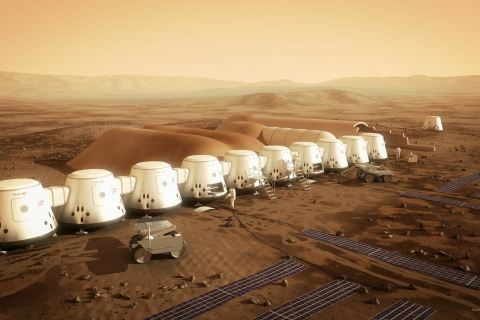
The Mars One Foundation, an ambitious non-profit that plans to colonize the red planet has 30,000 volunteers who have finished the application requirements. They have many other applicants still in the process of enrolling; but those few that will be chosen for the missions should be aware of a significant catch: It is a one way trip.
 
The foundation plans to put its first group of 4 astronauts on the red planet on 2023. They will first have to pass a training program lasting several years, teaching them everything from first aid, to how to grow food and obtain water and air. A big emphasis of the training is dealing with the isolation of living in a remote location.
 
Ethnropy
 
Global Warming could lead to more violence among human race as per a new study from United States. Many people would the new revelation as shocking as earlier, global warming was blamed for intense storms, flooding and droughts in some regions.
 
The study has revealed that climate change could lead to more domestic violence and higher rate of crime in the society. One major reason for the violence has been related to people moving to different places due to weather related problems in their native region. This could lead to shift the balance in the places where people would migrate. The local population would feel the pain of the migration of new people to their region.

10 August 2013

"Democracy" - American style

It’s August 2013. What better time to talk about 2016?

At this point, Hillary Rodham Clinton has been awarded the Democratic nomination virtually by default and declared the clear favorite to win the general election against her as yet unknown Republican opponent.

Why even bother to have an "election"? The only real reason is the money that the mass media rake in by running ads and commercials. The U.S. will experience eight years of Hillary, then most likely eight years of a Hispanic, and then most likely eight years of an Asian - and thereafter there won't be a "U.S."

And in the meantime, the U.S. will continue to be hollowed-out and exploited by plutocrats, the Israel Lobby, and the militant, organized "minorities": you can take that to the "too big to fail" bank.

31 July 2013

Viewpoint: The Seeds of a Magnetic Universe

The Universe is magnetized. This is true on “small” length scales, such as in planets and stars, and over much larger scales, such as across the tenuous gas in galaxies and galaxy clusters and, possibly, the even more rarefied intergalactic medium. Physicists are fairly certain that these magnetic fields weren’t created in the big bang (the reason has to do with the symmetry of Maxwell’s equations). Rather, for the most part, they assume that small “seed fields,” which formed some time after the big bang, were amplified into what we observe today. But how these seed fields materialized remains one of the great, unsolved problems in cosmology.

In Physical Review Letters, Smadar Naoz and Ramesh Narayan at the Harvard-Smithsonian Center for Astrophysics, Massachusetts, propose a possible solution. They have revisited a model for the generation of small magnetic fields in a plasma, called the Biermann battery, and shown that this process could have generated seed fields in the Universe much earlier than was previously thought possible. Although the fields they calculate are weak, the fact that they could have existed early in the age of the Universe means there was more time for other processes to amplify them into the fields we observe today.

Theories of the origin of cosmological fields, or, magnetogenesis, are either top down or bottom up. Top down theories invoke a process that operates everywhere, producing a pervasive field. In bottom up theories, magnetogenesis occurs in small objects, and the magnetic fields are then dispersed to large scales. Both types of theory require two stages. The first is to create a seed field. In the second phase, the existing field grows by a process called a dynamo, in which the kinetic energy in the flowing magnetic plasma is converted, by induction, into magnetic energy. (The 22-year solar magnetic activity cycle is a famous example of an astrophysical dynamo.) Although it’s still unclear exactly how plasma flows amplify magnetic fields, large-scale shear and small-scale turbulence are both thought to play a role.

Thomas Nagel: Thoughts Are Real

 
The philosopher Thomas Nagel’s new book, “Mind and Cosmos: Why the Materialist Neo-Darwinian Conception of Nature Is Almost Certainly False,” restores the primal force of a great old philosophical word, “metaphysics.” He starts with a boldly discerning look at that strange creature, mankind, and comes to some remarkable speculations about who we are and what our place is in the universe. Incidentally (and seemingly unintentionally) he illuminates, along the way, some significant aspects of the cinema, and of art overall. 
 
The book deals with science—specifically, Darwinian ideas regarding evolution and natural selection—and it’s filled with the quasi-scientific language and argumentation that characterizes much of Anglo-American analytical philosophy. This is unfortunate, because the ideas that Nagel unfolds ought to be discussed by non-specialists with an interest in the arts, politics, and—quite literally, in this context—the humanities.
 
Physics is the question of what matter is. Metaphysics is the question of what exists. People of a rational, scientific bent tend to think that the two are coextensive—that everything is physical. Many who think differently are inspired by religion to posit the existence of God and souls; Nagel affirms that he’s an atheist, but he also asserts that there’s an entirely different realm of non-physical stuff that exists—namely, mental stuff. The vast flow of perceptions, ideas, and emotions that arise in each human mind is something that, in his view, actually exists as something other than merely the electrical firings in the brain that gives rise to them—and exists as surely as a brain, a chair, an atom, or a gamma ray.
 
In other words, even if it were possible to map out the exact pattern of brain waves that give rise to a person’s momentary complex of awareness, that mapping would only explain the physical correlate of these experiences, but it wouldn’t be them. A person doesn’t experience patterns, and her experiences are as irreducibly real as her brain waves are, and different from them.
 
Nagel offers mental activity as a special realm of being and life as a special condition—in the same way that biology is a special realm of science, distinct from physics. His argument is that, if the mental things arising from the minds of living things are a distinct realm of existence, then strictly physical theories about the origins of life, such as Darwinian theory, cannot be entirely correct. Life cannot have arisen solely from a primordial chemical reaction, and the process of natural selection cannot account for the creation of the realm of mind. Biology, in his view, becomes a variety of science that is radically distinct from physics—it deals with a vast and crucial realm of phenomena that physics doesn’t and can’t encompass, precisely because they’re aspects of living things that are not physical:
 
subjective consciousness, if it is not reducible to something physical, … would be left completely unexplained by physical evolution—even if the physical evolution of such organisms is in fact a causally necessary and sufficient condition for consciousness.

Since neither physics nor Darwinian biology—the concept of evolution—can account for the emergence of a mental world from a physical one, Nagel contends that the mental side of existence must somehow have been present in creation from the very start. But then he goes further, into strange and visionary territory. He argues that the faculty of reason is different from perception and, in effect, prior to it—“an irreducible faculty.” He suggests that any theory of the universe, any comprehensive mesh of physics and biology, will need to succeed in “showing how the natural order is disposed to generate beings capable of comprehending it.”
 
And this, he argues, would be a theory of teleology—a preprogrammed or built-in tendency in the universe toward the particular goal of fulfilling the possibilities of mentality. In a splendid image, Nagel writes, “Each of our lives is a part of the lengthy process of the universe gradually waking up and becoming aware of itself.”
 
In effect, the universe tends toward maximizing certain goals and places “value in the result toward which things tend”—and Nagel assimilates this metaphysical tendency to human morality, which would mesh, gradually and incrementally (with backward as well as forward steps) with the value that inheres in the universe. In this view, the discovery of those values is inextricable from the understanding of what the universe is. Physics and metaphysics, biology and moral philosophy join together in Nagel’s vision of a distant, eventually unified-field theory of the universe, of existence.
 
His cosmic, overarching vision is remarkably anthropocentric—anchored in an idea of practical progress at a scale of human experience, with human history echoing the history of the universe.
I’m immensely sympathetic to Nagel’s line of thought (full disclosure: he was my professor for a semester at Princeton in the mid-seventies). It offers, in a vastly more substantial form, a parallel to my own view of movies. When discussion arose here several years ago regarding new trends toward realistic movie-making, I contended, in effect, that everything is real—that the realities that matter in movies are mental constructs, whether emotional or political, and that, therefore, a movie that rigorously represents solely the physical aspects and actions of its characters doesn’t necessarily come any closer to anything like reality, and may even get further from it.
 
A work of animation, a C.G.I. fantasy, or a film that depicts its characters’ dreams, visions, hallucinations, and inner voices—or that fragments events with montage of images and sounds—may well get to reality more intimately, deeply, or fully. The recent movie that seems best to embody a perspective similar to Nagel’s is Terrence Malick’s “The Tree of Life,” with its view of a kind of prehistorical history as related to lived (albeit imagined) experience. (The most famous example is the remarkable scene of C.G.I.-generated dinosaurs discovering a primordial sense of mercy.)
 
Nagel’s thesis has, I think, similarly radical consequences for philosophy itself. His argument implies that consciousness—indeed, mental life, whether conscious or not—is not atomic but holistic: there is no such thing as a piece or an atom of experience, but, rather, a mind at a given moment is flooded with an incalculable number of perceptions, memories, ideas, judgments, and desires. Even enumerating them in the plural is a little silly, because it implies the ability to isolate them as singular events or things. Therefore, philosophy, in order to account for mental life, will need to turn aside from isolated experiments in logic and argumentation in favor of rough-edged, life-sized chunks—historical events and figures, works of art, artists themselves, cities, countries, languages, human dramas of all sorts, lived or imagined.
 
Which is to say that, though Nagel doesn’t write about art in “Mind and Cosmos,” the book’s widest implications involve art and how it helps us to understand the world. If Nagel is right, art itself would no longer be merely the scientist’s leisure-time fulfillment but would be (I think, correctly) recognized as a primary mode of coming to grips with the mental and moral essence of the universe. It would be a key source of the very definition of life. Aesthetics will be propelled to the forefront of philosophy as a crucial part of metaphysical biology, and so, the writing and practice of philosophy will come to look more like texts by Nietzsche, with their own built-in aesthetic and subjective components and emphases on historical and practical events. The very beauty of Nagel’s theory—its power to inspire imagination—counts in its favor.

Incredible Technology: How to See the Big Bang

While we may never know all the details of our universe's explosive birth, scientists have been able to piece together quite a bit by studying the ancient light that saturates the cosmos.
The universe burst into existence 13.8 billion years ago in a "Big Bang" that blew space up like a giant balloon. For nearly 400,000 years after that, the universe remained a seething-hot, opaque fog of plasma and energy.

But then, in an epoch known as recombination, the temperature dropped enough to allow the formation of electrically neutral atoms, turning the universe transparent. Photons began to travel freely, and the light we know as the cosmic microwave background (CMB) pervaded the heavens, filled with clues about the first few moments after creation. [Big Bang to Now in 10 Easy Steps]

"As far as we know, that's as far [back] as we can see — we get an image of the universe as it was when it was about 389,000 years old," said John Mather of NASA's Goddard Space Flight Center in Greenbelt, Md., senior project scientist for the space agency's James Webb Space Telescope, the successor to the Hubble Space Telescope. Mather and George Smoot won the 2006 Nobel Prize in Physics for their work on NASA's Cosmic Background Explorer satellite mission.

"We believe — although it's not 100 percent proven — that spots that we see in the microwave map from when the universe was 389,000 years old were actually imposed on it when [the universe] was sub-microseconds old," Mather told SPACE.com. "There's an interpretive step there, but it's probably right."

"We believe — although it's not 100 percent proven — that spots that we see in the microwave map from when the universe was 389,000 years old were actually imposed on it when [the universe] was sub-microseconds old," Mather told SPACE.com. "There's an interpretive step there, but it's probably right."

Most researchers think the "bang" portion of the Big Bang came during a dramatic and extremely brief period of inflation, which began about 10 to the minus 36 seconds — one trillionth of a trillionth of a trillionth of a second — after the universe's birth.

During inflation, the theory goes, the universe expanded faster than the speed of light, doubling in size perhaps 100 times or more in just a few tiny fractions of a second. (Einstein's theory of special relativity holds that no information or matter can travel faster than light through space, but this rule does not apply to inflation, which was an expansion of space itself.)

"Inflation theory is the idea of going from spontaneous quantum fluctuations to something of macroscopic size," said WMAP principal investigator Charles Bennett, of Johns Hopkins University in Baltimore, Md. (The WMAP spacecraft, which launched in 2001, stopped gathering data in 2010.)
The precision mapping of the CMB performed by COBE, WMAP and Planck has provided strong support for inflation, helping cement its position as the leading explanation of the universe's first few moments.

"Why the cosmic microwave background temperature is the same at different spots in the sky would be a mystery if it was not for inflation saying, well, our whole sky came from this tiny region," Bennett told SPACE.com. "So the idea of inflation helps answer some of these mysteries, and it explains where these fluctuations came from."http://news.yahoo.com/incredible-technology-see-big-bang-153127374.html

25 July 2013

Light stopped completely for a minute inside a crystal: The basis of quantum memory

Scientists at the University of Darmstadt in Germany have stopped light for one minute. For one whole minute, light, which is usually the fastest thing in the known universe and travels at 300 million meters per second, was stopped dead still inside a crystal.
This effectively creates light memory, where the image being carried by the light is stored in crystals. Beyond being utterly cool, this breakthrough could lead to the creation of long-range quantum networks — and perhaps, tantalizingly, this research might also give us some clues on accelerating light beyond the universal speed limit.

24 July 2013

White self-preservation angers some people

A monument on a hill overlooks the Kleinfontein community. "We are here for our culture, for our safety, for our people," said Annatjie Oncke, a resident.

20 July 2013

Canadian scientists helping to unravel the secret of the universe's existence

VANCOUVER - Science is one step closer to solving one of the most profound mysteries in the cosmos due to what an international team of physicists say is an unprecedented observation about a fundamental particle in the universe.

When the universe was created, the Big Bang converted energy into matter and antimatter — two materials that destroy each other when they come into contact.

"In some sense, we're asking why anything exists at all, if it wasn't annihilated by equal quantities of matter and antimatter," Tanaka said in an interview.

"There's some kind of imbalance that occurred when the matter became dominant, and that is something that we can't explain."

"By studying these elementary particles, we're sort of looking at the universe near the time of the Big Bang," he said.

"It gives us a glimpse into what might have happened, what particles where doing, and explaining how the universe started from the Big Bang to where we are now, with galaxies, and molecules and...people.

19 July 2013

World's first mission to the Moon's South Pole announced: cosmic speciation

The world’s first mission to the South Pole of the Moon was announced Thursday, opening up the possibility that the public will be able to access images from the moon online.
 
The private enterprise mission, announced by the International Lunar Observatory Association and Moon Express, Inc., will be both scientific and commercial, and plans to deliver the International Lunar Observatory (ILO) aboard a Moon Express robotic lander.
Artist's depiction of the ILO lunar telescopes that will be delivered by a Moon Express lander (Moon Express)
 
The observatory is intended to establish a base for permanent astrophysical observations and a lunar commercial communications systems for researchers to utilize.
 
“We are very excited to announce that our second Moon mission will be to the lunar South Pole to deliver the International Lunar Observatory and to prospect for resources,” said Moon Express CEO Dr. Robert Richards.  “The mission will provide a historic landing in an unexplored region of the Moon that may harbor some of the greatest resource deposits in the solar system.”
 
If successful, the ILO will be the first private space telescope to operate from the lunar surface and be available to researchers, educators and the general public through the internet.
 
It will allow them to access images from the surface of the Moon, and it is hoped that it will create a new model of “citizen science” public participation and international collaboration.

Chimps, Orangutans Have Human-Like Memory: cosmic Brotherhood of Sentience

Now, a new study published today in Current Biology shows that captive chimpanzees and orangutans can quickly recall past events like people. Chimpanzees are our closest relatives.
 
A chimpanzee named Frodo seems to pose in Gombe Stream National Park, Tanzania.
 
“I think [the study] tells us that our memory systems are not unique,” said study co-author Gema Martin-Ordas, a postdoctoral researcher.
 
 
Chimps and orangutans ”share some features of autobiographical memories that humans have, but we can’t be sure whether they’re aware of those memories, and that’s the debate,” Martin-Ordas said.
 
The science of memory storage and remembrance is still a field in its infancy: The brain is such a complex organ that it’s difficult to pinpoint exact memory-storage processes. (See a 3-D memory interactive.)

CIA said to back study on ways to hack the global climate

This file graphic illustrates techniques to cool the Earth via a thin cloud of aerosols, including, from left, artillery cannons, a miles-long tower, military aircraft and stratospheric balloons. (Brian West / American Geophysical Union)
 
The U.S. intelligence community is helping to fund a study that is evaluating ways to cool the global climate, including proposals to pump the skies full of sunlight reflecting particles and build machines that vacuum greenhouse gases from the atmosphere.
 
A final report is tentatively scheduled for release in the spring or summer of 2014 by the National Academy of Sciences, which has convened a committee of science and policy experts to study the issue.
 
As for concerns that intelligence community funding will make some or all of the committee's findings secret, Rugani said not to worry.
"The report is unclassified. It will be conducted in the public sphere and will be made available to the public in its entirety once it is completed," she said. "So, there's nothing nefarious going on here."

Gut Microbes Can Split a Species: holonic hologram

Here's how to create a new species. Put animals—say finches—from the same species on separate islands and let them do their thing for many, many generations. Over time, each group will adapt to its new environment, and the genomes of the two populations will become so different that if you reintroduce the animals to the same habitat, they can no longer breed successfully. Voilà, one species has become two. But a new study suggests that DNA isn't the only thing that separates species: Some populations diverge because of the microbes in their guts.
The paper is "important and potentially groundbreaking," says John Werren, a biologist at the University of Rochester in New York. "Scientists have studied speciation … for many years, and this opens up a whole new aspect to it."
 
Bordenstein goes one step further. The genes of microbes harbored by an organism are just as important for evolution as the genes in its own cells, he says, calling both together a "hologenome."

Newborn Star's 'Snow Line' Reveals Clues About Planet Formation

The location of the snow lines for volatiles can affect planetary formation. Recent research has indicated the water snow line, shown here, lies farther out than previously suspected. Credit: NASA, ESA, and A. Feild (STScI)
 
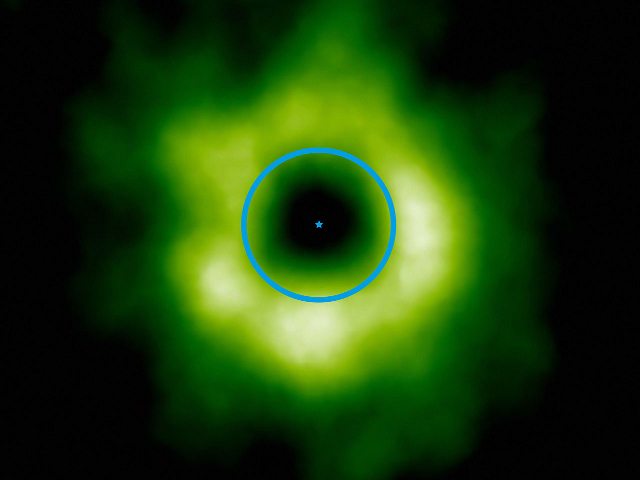
Astronomers have identified the point where carbon monoxide (CO) freezes in the disk around a sunlike star — information that could help them understand how planets form.

A team of international scientists has calculated the CO "snow line" for a star called TW Hydrae, determining that the gas solidifies at about the distance of the orbit of Neptune, where it could help feed the formation of the outer edges of the system.

"The CO snow line is interesting, not only because CO is abundant in the disks, but its snow line is the most accessible to direct observations due to its low freeze-out temperature — it's farther away from the star," said principal investigator Chunhua Qi of the Harvard-Smithsonian Center for Astrophysics. "It could mark the starting point where smaller icy bodies, like comets, and dwarf planets, like Pluto, would begin to form."
 Stars form when a disk of dust and gas collapses in on itself due to gravity. The remaining material continues to orbit the newly formed object in a disk of material.
 
As dust and gas particles pass through the disk, scientists say, they come together to form larger and larger clumps that can eventually grow into planets. Frozen volatiles help this process along.
 
"The snow line provides more sticky solid grains, and enhances the planet formation efficiency and grain growth," Qi told SPACE.com in an email. But determining the location of these grains can be a challenge. Emission from volatiles along the outside of the disk can make it difficult for scientists to image the telltale signs of frozen compounds.
 

Star light, star bright

47 Tucanae, 16,700 light-years from Earth, is 10.5 billion years old and one of the brightest of our galaxy’s globular clusters.
 
UBC astronomers have used NASA’s Hubble Space Telescope to track the orbital motion of 33,000 stars in one of the galaxy’s oldest globular clusters, offering new insights into the formation of the Milky Way.
 
The careful examination of “cosmic choreography” enabled researchers, for the first time, to link the movement of stars within the cluster to the stars’ ages. The study reveals two distinct generations of stars within globular cluster 47 Tucanae, 16,700 light-years from Earth.
 
The lack of heavier elements in the population of older, redder stars reflects the initial composition of the gas that formed the cluster. After the most massive of these stars completed their stellar evolution, they expelled gas enriched with heavier elements back into the cluster. This gas collided with other gas and formed a second, more chemically enriched generation of bluer stars that was concentrated toward the cluster centre. Over time these stars moved slowly outward into more elliptical orbits.
 
This is not the first time Hubble has revealed multiple generations of stars in globular clusters. In 2007, Hubble researchers found three generations of stars in the massive globular cluster NGC 2808. But Richer’s team is the first to link stellar dynamics to separate populations.
 
Astronomers need to continue analyzing these multiple generations to better understand how stars formed in distant galaxies in the early universe.

18 July 2013

Newly discovered “Pandoravirus" could redefine life as we know it

The genome of Megavirus chilensisa, the previous record holder for largest virus, with 1,200 genes. The new pandoravirus has roughly 2,500 genes. (Photo: Wikimedia)
 
The discovery of two new jumbo-sized viruses is blurring the lines between viral and cellular life and could point to the existence of a new type of life, scientists suggest.
 
The two large viruses, detailed in this week's issue of the journal Science, have been dubbed "Pandoraviruses" because of the surprises they may hold for biologists, in reference to the mythical Greek figure who opened a box and released evil into the world.
 
The discovery of Pandoraviruses is an indication that our knowledge of Earth's microbial biodiversity is still incomplete, explained study coauthor Jean-Michel Claverie, a virologist at the French National Research Agency at Aix-Marseille University.
 
"Huge discoveries remain to be made at the most fundamental level that may change our present conception about the origin of life and its evolution," Claverie said.

16 July 2013

Decapitated worms can regenerate their brains, and the memories stored inside: harmonic bio-immanence

As for where these memories are coming from, the researchers don’t really know. They speculate that the memories might be stored elsewhere in the body, perhaps in the neurons that make up the worm’s nervous system (see the network diagram in the image above). It is possible that the nervous system also learns something during training, and then somehow these neurons play a role in the recreation of old memories when the brain is regenerated.
 
A lot more research will need to be done to work out exactly what’s going on here — and more importantly, whether other animals, including humans, also store memories outside of the brain.

14 July 2013

Antarctic Lake Vostok: Inhospitable Lake Somehow Full Of Life, Could This Mean Species On Mars?

The Vostok research facility in Antarctica. (Photo : Reuters)
 
Lake Vostok, hidden beneath an Antarctic glacier, is so deep and cold that it resembles an alien planet where life should be impossible Scientists have discovered a surprising amount of critters beneath the frigid water.

The researchers identified billions of species through DNA and RNA sequencing, in a place where life should not be able to exist, according to a Bowling Green State University press release.
 
"The bounds on what is habitable and what is not are changing," Dr. Scott Rogers, a Bowling Green State University professor of biological sciences who worked on the study, said.
 
Lake Vostok is the fourth deepest lake on Earth, and the largest sub glacial lake known in Antarctica.
The lake is under high pressure thanks to 1.5 million years-worth of ice coverage and a depth of nearly two miles.
Due to the lake's conditions there are almost no nutrients available. It lies below sea level and experiences harsh and unpredictable weather conditions.
 
Scientists thought the lake's conditions rendered it inhospitable to all types of life, even bacteria.
The team proved past speculations wrong when they examined the underside of the million-year-old ice.
 
"We found much more complexity than anyone thought," Rogers said. "It really shows the tenacity of life, and how organisms can survive in places where a couple dozen years ago we thought nothing could survive."

Primeval underwater forest discovered in Gulf of Mexico

Scuba divers have discovered a primeval underwater forest off the coast of Alabama.
 
The bald cypress forest was buried under ocean sediments, protected in an oxygen-free environment for more than 50,000 years, but was likely uncovered by Hurricane Katrina in 2005, said Ben Raines, one of the first divers to explore the underwater forest and the executive director of the nonprofit Weeks Bay Foundation, which researches estuaries.
 
The forest contains trees so well-preserved that when they are cut, they still smell like fresh cypress sap, Raines said.
 
The stumps of the cypress trees span an area of at least 0.5 square miles (0.8 kilometers), several miles from the coast of Mobile, Ala., and sit about 60 feet (18 meters) below the surface of the Gulf of Mexico.

Immersed & Permeated

NASA's Interstellar Boundary Explorer, or IBEX, recently mapped the boundaries of the solar system's tail, called the heliotail. By combining observations from the first three years of IBEX imagery, scientists have mapped out a tail that shows a combination of fast and slow moving particles. The entire structure twisted, because it experiences the pushing and pulling of magnetic fields outside the solar system.