Featured Post

Amazon Banned My Book: This is My Response to Amazon

Logic is an enemy  and Truth is a menace. I am nothing more than a reminder to you that  you cannot destroy Truth by burnin...

05 August 2016

Putin encourages Iran to join Russia-led Eurasian alliance

Shanghai Cooperation Organisation

Russian President Vladimir Putin has praised the successful cooperation between Moscow and Tehran, and has expressed hope that a free trade zone can soon be established between Iran and the Russia-led Eurasian Economic Union.

“Iran is Russia’s longtime partner. We believe that bilateral relations will benefit from the reduction of tensions around Iran following the comprehensive agreement on the Iranian nuclear program,” Putin said in a major interview with Azerbaijani state news agency Azertac released on Friday. He added that Iranian leaders shared his approach.


In some branches of the economy Russian-Iranian cooperation has already become strategic, Putin noted. This concerned first of all the nuclear energy sphere, with Russia completing and servicing the Bushehr power plant in Iran and reaching agreements on building eight more nuclear power units.

Overall the two states have managed to increase bilateral trade by 70 percent and bring it to $855 million in the first five months of 2016.

The Russian leader also welcomed the possible creation of a free trade zone between Iran and the Eurasian Economic Union – the bloc that currently unites Russia, Armenia, Belarus, Kazakhstan and Kyrgyzstan. He said that work has already started to research the possibility of such a move, adding that Russia would continue to support Iran's pursuit of full membership in the Shanghai Cooperation Organization – the Eurasian military-political bloc comprised of Russia, China, Kazakhstan, Kyrgyzstan, Tajikistan and Uzbekistan.

On August 8, Putin is expected to visit Baku and take part in the first-ever trilateral summit of the leaders of Russia, Azerbaijan and Iran.

In November last year, Russia and Iran agreed to develop economic ties, with Moscow promising to provide a $5 billion state loan to Tehran for the promotion of industrial cooperation. The loan is expected to boost trade between the two countries, with the target set at $10 billion, up from the current $1.6 billion.

The two countries have selected 35 priority projects in energy, port facilities, and railway electrification.

In March this year, Russian Deputy Agriculture Minister Sergey Levin promised that Moscow would ease customs procedures for Iranian agricultural products and speed up their delivery to Russian markets.

Clinton Vows White Genocide: Pledges to Fast-Track Open Borders & Provide Economic Boost for Blacks, Latinos

IMMIGRATION REFORM BILL TO BE FAST-TRACKED IN HILLARY'S FIRST 100 DAYS


Trying to win the first election since President Barack Obama galvanized black and brown voters to put him in office, Democratic nominee Hillary Clinton told the nation's largest gathering of African American and Hispanic journalists she sees a political landscape favorable for immigration reform and promised programs for economic empowerment of minorities.

Trying to win the first election since President Barack Obama galvanized black and brown voters to put him in office, Democratic nominee Hillary Clinton told the nation's largest gathering of African American and Hispanic journalists she sees a political landscape favorable for immigration reform and promised programs for economic empowerment of minorities.

In a rare news conference, Clinton said a win by her in November would send a clear message to Republicans "that it is time for them to quit standing in the way of immigration reform."

"There's nothing like winning to change minds," she said.

"I see the political landscape as increasingly favorable to making this happen," Clinton said in response to a question from Telemundo's Lori Montenegro, one of two journalists who opened the questions from the rest of the audience.

Clinton urged people to vote not only for president, but also for House and Senate candidates, making clear that minority turnout would make it far easier for her to deliver on immigration and other issues.

Clinton, who has promised to propose an immigration bill within its first 100 days, said she had already spoken to Senate colleagues who she said had assured her "this will be fast tracked."

Clinton carried an economic message to the roomful of television, newspaper and online journalists, bloggers and some communicators.

Discussing the profound loss of wealth by blacks (50 percent drop) and Latinos (66 percent), Clinton called raising economic conditions for the groups, "part of the long continuing struggle for civil rights."

She said she would take up a plan pushed by Rep. James Clyburn, D-S.C., that calls for 10 percent of rural development investments to be made in places where at least 20 percent of the population has lived in poverty for 30 years are more. This is a proposal Clyburn had floated as part of the legislation to recover from the Great Recession but was not included in recovery legislation.

Citing the high unemployment rates among black and Latino youths, she reiterated her campaign platform of investing $20 billion to create jobs for young people, pledged to help black and Latino enterprises get access to capital.

"We need to build an economy and future every American can be proud of," she said.

German pro-White patriots block invader colony in Rostock

Concerns about pro-White resistance have prompted the northern German city of Rostock to stop construction plans to facilitate the ongoing invasion


The city of Rostock said this week that plans to build a new asylum home for families have been cancelled after repeated protests against refugees and other conflicts in recent weeks.

The decision was based on risk assessment by the local police considering racist violence.

In July, a home for unaccompanied refugee children between the ages of seven and 17 had to be evacuated due to far-right protests, according to Spiegel.

The children were then housed in other accommodation around the city.

Some said the city gave into right-wing violence too easily.

"It is incomprehensible why the city capitulated so quickly," Wolfgang Richter of the group GGP Rostock, which was working to support the cancelled refugee home, told Spiegel.

Green politician Torsten Sohn said that bullying and racist violence seemed to have won.

More than two decades ago in 1992, the city saw violent xenophobic riots break out as people threw stones and petrol bombs at the homes of asylum seekers, who at that time came mainly from Romania. The riots resulted in hundreds of arrests.

Since the influx of people coming mainly from war-torn Syria and Iraq to seek asylum from Germany, the country has seen a rise in extremist violence from the far-right, with attacks on asylum homes increasing by a factor of five between 2014 and 2015.

Rostock social senator Steffen Bockhahn told Die Zeit that although the decision to stop the construction of the home "hurt" him, he felt first and foremost responsible for the safety of young people.

"For me this was a matter of instructions," Bockhahn said. "The interior ministry is responsible for safety."

04 August 2016

Saxony-Anhalt’s Supreme Court rules in favour of Holocaust denial

Saxony-Anhalt’s Supreme Court handed a lenient sentence to Hans Püschel on Wednesday, a Holocaust denier


Chief Judge Gerhard Henss has overturned other convictions for slanderous and defamatory statements, including Holocaust denial in other instances.

The 67 years old Hans Püschel is a member of the pro-White National Democratic Party (NPD) and former mayor of Krauschwitz, a municipality made of smaller villages in East Germany along the borders with Poland.

Püschel was elected in 2010, but resigned in 2013 amidst outcry on his views on the holocaust, which he published on line.

He said witness accounts of Auschwitz-Birkenau were “lies” and that the camp in Poland really was a sports ground equipped with a hospital and “60 doctors” for inmates.

Püschel also compared Nazi holocaust victims with “dead Germans,” without specifying whether he referred to Nazis or others: “If we put a thousand hunks of concrete in the middle of Berlin for murdered Jews, then at least 3,000 belong there alongside them for murdered Germans.”

He also spoke of the devastating influence of Jews and Zionism in Germany today.

To this day, he stands by these views.

In 2013 a court imposed a €3,000 fine on Püschel; in 2014, a higher court upheld the decision. But, the highest court of Saxony-Anhalt found that these statements in no way questioned the Holocaust and annulled the ruling. The Court provided no rationale for its ruling.

Dachau was a pilot camp, used as a prototype for the construction of other concentration camps. The German Constitution explicitly forbids holocaust denial.

Jewish organizations and historians are protesting the ruling and the attempt to re-write German history.

Püschel was a long time member of the Social Democrats (SPD) party, before joining the patriotic resistance in 2010.

****************

MORE BELOW:

Anti-Semitic NPD ex-mayor's acquittal slammed as 'scandalous'

Saxony-Anhalt's highest court is under fire for a precedent-setting lenient sentence on a former mayor convicted of Holocaust denial. The pro-White politician from former East Germany remains unapologetic.


Historians and a prominent Jewish council are protesting the "scandalous" acquittal announced by an appeals court, which threw out an already lenient financial judgment against a former mayor who wrote blogs questioning Nazi Germany's attempt to exterminate Europe's Jews.

Hans Püschel was forced to resign in 2013 as mayor of Krauschwitz, a town of around 600 people, for statements he published on the internet that minimized or denied Nazi crimes. In his writings, he belittled historical accounts of the death toll at the Auschwitz-Birkenau concentration camp in occupied Poland as "lies" and claimed that it resembled a sports ground equipped with a modern hospital and "60 doctors" for inmates.

The German constitution forbids questioning the existence of the Holocaust or praising the Third Reich.

Püschel, 67, is a member of the far-right National Democratic Party of Germany (NPD), an ultranationalist fringe party that skirts the line between legal political discourse and prohibited speech. Previously a longtime member of the Social Democratic Party (SPD), he changed his affiliation only in 2010, when he ran for mayoral office as an NPD candidate.

Referring to the Memorial to the Murdered Jews of Europe in central Berlin, Püschel also suggested: "If we put a thousand hunks of concrete in the middle of Berlin for murdered Jews, then at least 3,000 belong there alongside them for murdered Germans." On the current role of Jews in German society, he wrote of "the dubious to virulent and devastating influence of Jews and Zionism on Germany."

Lead judge had previously overturned NPD convictions

In 2013, a criminal court imposed fines on Püschel totaling 3,000 euros for the offensive writings. The amount was calculated as equivalent to 100 "daily rated fines" of 30 euros ($33.70), in line with the German legal principle intended to levy fines according to earnings and without imposing economic hardship.

In 2014, a higher regional court upheld the lower court's 2013 decision. The final decision by the state's highest court overturned the regional court's findings and nullified the penalties.

The Saxony-Anhalt court wrote in its judgment that while Püschel had broken the law, it found no evidence that he had "trivialized" the Holocaust in general.

In 2011, the lead judge of the court, Gerhard Henss, also overturned the convictions of two other NPD party officials who had made slanderous and defamatory statements. The court refused to answer any questions about the decision, citing judicial independence.
Shock among historians at verdict

Josef Schuster, president of the Central Council of Jews in Germany, told Die Welt newspaper that the case was alarming given the political climate in which rightist forces are on the rise in Germany and the rest of Europe. He said "attempts to rewrite German history and mock the victims of National Socialism are an unacceptable trivialization of the crimes of the Nazis."

Historian Christoph Jahr of Humboldt University in Berlin told the newspaper he could not comprehend the court's sentencing or its "very benevolent tone" in its reasoning. The Holocaust expert said he could only describe the court decision as "scandalous."

Püschel laments his plight of holding unpopular views

In an interview with Die Welt, Püschel said he was not celebrating the verdict, and went on to make further defamatory statements about his displeasure at Jewish participation in German society today. He also lamented the unpleasant consequences of his convictions on his own life.

"There is no pleasure when one gets into trouble everywhere - even within his own family - because of his beliefs," he said.

Australian pro-White party wins big in election

The pro-White One Nation party has gained seats in Australia's Senate. Its four newly elected senators will give the rightist fringe party of Pauline Hanson unprecedented influence in the closely divided upper house


The Australian Electoral Commission finalized the outcome of the July 2 national election on Thursday, showing a closely divided Senate with the openly anti-Islam One Nation party likely to emerge as a crucial tie breaker.

That's because Prime Minister Malcolm Turnbull's conservative coalition saw its Senate numbers shrink from 33 to 30 in the 76-seat upper chamber. The opposition center-left Labor Party has 26 senators and the Greens party has nine senators.

Turnbull will need the support of at least nine of the remaining 11 senators to pass any laws and will likely look to One Nation's controversial leader Pauline Hanson for support in pushing his agenda, which already includes the total rejection of asylum-seekers arriving by boat.

Her unexpectedly influential position after an indecisive election - Hanson and a small handful of others will likely form a bloc whose vote would determine the passage or rejection of legislation - mean that mainstream politicians ignore her at their peril.

Fear of attack fuels the far-right

Regular discussions about the danger posed by violent Islamists has entered Australia's mainstream, helping to fuel the far-right. Duncan Lewis, director-general of the Australian Security Intelligence Organisation, told a parliamentary committee in May that as many 59 Australians had been killed fighting with Islamic State in Iraq and Syria.

That occurrence has led many ordinary Australians - and influential television personalities- to come out in favor of Hanson's Muslim immigration ban, stirring fierce debate on prime-time television and on social media.

Foreshadowing her newfound influence, Hanson released a video message Monday after meeting the premier, telling her supporters they had discussed several policies and that he was "prepared to listen to me."

An unapologetically tough-talking former chip shop owner, Hanson was first elected to the parliament 20 years ago. In her first speech, she said she believed Australia was in danger of being "swamped by Asians."

Echoes of Donald Trump

Some of Hanson's policies mirror US presidential hopeful Donald Trump's, including a halt on Muslim immigration. The 62-year-old from Brisbane, who left school at 15, also says mosques and schools should be under mandatory video surveillance and favors banning the wearing of women's burqa and niqab veils in public.

Brian Burston, who represents One Nation in New South Wales, Australia's most populous state, said that a moratorium on Muslim immigration was needed to alleviate community fear.

"You can't discern between the different groups, and you don't know whether there's ISIS infiltrators in any of them," Burston said. "The weapon of choice now is a truck. What next? It's just frightening."

Race relations in Australia remain tense and there are fears that the openly xenophobic pro-White policies of One Nation could incite violence on the street.

In another parallel with Trump, the One Nation leader's public appearances have attracted protesters and supporters in numbers rarely seen in Australian politics.

One Nation Sen. Malcolm Roberts told a news conference Thursday that the country's anti-racial discrimination laws should be changed because, he said, they limited free speech.

"When we have free speech curbed, we don't talk about the real issues - tax, Islam, terrorism, the economy," Roberts said.

03 August 2016

Most likely Earth-like exoplanets cataloged

Researchers list exoplanets with the most potential to have liquid water, or even life


An international team of researchers has pinpointed which of the more than 4,000 exoplanets discovered by NASA's Kepler mission are most likely to be similar to Earth. The research outlines 216 Kepler planets located within the "habitable zone" -- the area around a star in which a planet's surface could hold liquid water. Of those they list 20 that are the best candidates to be habitable rocky planets like Earth.

"This is the complete catalog of all of the Kepler discoveries that are in the habitable zone of their host stars," said Stephen Kane, an associate professor of physics and astronomy at San Francisco State University and lead author of the study. "That means we can focus in on the planets in this paper and perform follow-up studies to learn more about them, including if they are indeed habitable."

The research also confirms that the distribution of Kepler planets within the habitable zone is the same as the distribution of those outside of it -- additional evidence that the universe is teeming with planets and moons where life could potentially exist.

The boundaries of the habitable zone are critical. If a planet is too close to its star, it will experience a runaway greenhouse gas effect, like Venus. But if it's too far, any water will freeze, as is seen on Mars. Kane and his colleagues sorted the planets by whether they were in a conservative or a more optimistic interpretation of the habitable zone. Then they further sorted them by planet size: smaller, rocky planets versus larger gas giants.

The four categories are aimed at helping astronomers focus their research. Those looking for moons that could potentially hold life can study exoplanets in the gas giant categories, for example.

The 20 planets in the most restrictive category -- rocky surface and a conservative habitable zone -- are the most likely to be similar to Earth. Kane has already begun gathering additional data on these planets, as well as those in the other categories.

Studying and cataloging the more than 4,000 exoplanets took more than three years and involved researchers at NASA, Arizona State University, Caltech, University of Hawaii-Manoa, the University of Bordeaux, Cornell University and the Harvard-Smithsonian Center for Astrophysics. The team included Natalie Hinkel, a former SF State post-doctoral scholar now with Arizona State, and Michelle Hill, an undergraduate Australian student studying abroad at SF State.

"It's exciting to see the sheer amount of planets that are out there, which makes you think that there is zero chance of there not being another place where life could be found," said Hill, who sought out Kane shortly after arriving on campus and soon got involved with the research.

Kane is one of the world's leading "planet-hunters," having discovered several hundred exoplanets, including Kepler-186f, a rocky planet included in the new catalog. He is contributing his scientific knowledge to two upcoming satellite missions -- NASA's Transiting Exoplanet Survey Satellite (TESS) and the European Space Agency's Characterizing ExOPLanet Satellite (CHEOPS) -- that will benefit from the information contained in his latest research.

"There are a lot of planetary candidates out there, and there is a limited amount of telescope time in which we can study them," Kane said. "This study is a really big milestone toward answering the key questions of how common is life in the universe and how common are planets like Earth."


************************


02 August 2016

Pro-White French politician Marion Le Pen endorses Trump


The rising star of France’s far-right party Front National (FN) wrote on Twitter: “Donald Trump is a less harmful candidate than Hillary Clinton.”

She has also said that the Republican candidate Mr Trump “responds to people’s hopes”. 

The leader of the FN, Marine Le Pen, has said that she would vote for the billionaire if she was American and eligible to vote in the upcoming elections. 

Marine said Mrs Clinton represented America’s harm in the world in terms of business models and international relations. 

Whereas, she has praised Mr Trump and where he stands with regards to Wall Street markets and financial lobbies. 

She also applauded Mr Trump’s showmanship and that he is a free man”.

The former leader of the Front National and Marion's grandfather, Jean-Marie Le Pen, has also said that he would vote for the business tycoon Mr Trump. 

DNA's dynamic nature makes it well-suited to serve as the blueprint of life

Billions of years ago, when the Earth was in its infancy and biology hadn't even gotten going, the precursors to the first living organisms were probably self-replicating strands of RNA. Scientists believe that this "RNA world" provided the foundation for life as we know it


A new study could explain why DNA and not RNA, its older chemical cousin, is the main repository of genetic information. The DNA double helix is a more forgiving molecule that can contort itself into different shapes to absorb chemical damage to the basic building blocks—A, G, C and T—of genetic code. In contrast, when RNA is in the form of a double helix it is so rigid and unyielding that rather than accommodating damaged bases, it falls apart completely.

The research, published August 1, 2016 in the journal Nature Structural and Molecular Biology, underscores the dynamic nature of the DNA double helix, which is central to maintaining the stability of the genome and warding off ailments like cancer and aging. The finding will likely rewrite textbook coverage of the difference between the two purveyors of genetic information, DNA and RNA.

"There is an amazing complexity built into these simple beautiful structures, whole new layers or dimensions that we have been blinded to because we didn't have the tools to see them, until now," said Hashim M. Al-Hashimi, Ph.D., senior author of the study and professor of biochemistry at Duke University School of Medicine.

DNA's famous double helix is often depicted as a spiral staircase, with two long strands twisted around each other and steps composed of four chemical building blocks called bases. Each of these bases contain rings of carbon, along with various configurations of nitrogen, oxygen, and hydrogen. The arrangement of these atoms allow G to pair with C and A to pair with T, like interlocking gears in an elegant machine.

When Watson and Crick published their model of the DNA double helix in 1953, they predicted exactly how these pairs would fit together. Yet other researchers struggled to provide evidence of these so-called Watson-Crick base pairs. Then in 1959, a biochemist named Karst Hoogsteen took a picture of an A-T base pair that had a slightly skewed geometry, with one base rotated 180 degrees relative to the other. Since then, both Watson-Crick and Hoogsteen base pairs have been observed in still images of DNA.

Five years ago, Al-Hashimi and his team showed that base pairs constantly morph back and forth between Watson-Crick and the Hoogsteen configurations in the DNA double helix. Al-Hashimi says that Hoogsteen base pairs typically show up when DNA is bound up by a protein or damaged by chemical insults. The DNA goes back to its more straightforward pairing when it is released from the protein or has repaired the damage to its bases.

"DNA seems to use these Hoogsteen base pairs to add another dimension to its structure, morphing into different shapes to achieve added functionality inside the cell," said Al-Hashimi.

Al-Hashimi and his team wanted to know if the same phenomenon might also be occurring when RNA, the middleman between DNA and proteins, formed a double helix. Because these shifts in base pairing involve the movement of molecules at an atomic level, they are difficult to detect by conventional methods. Therefore, Al-Hashimi's graduate student Huiqing Zhou used a sophisticated imaging technique known as NMR relaxation dispersion to visualize these tiny changes. First, she designed two model double helices—one made of DNA and one made of RNA. Then, she used the NMR technique to track the flipping of individual G and A bases that make up the spiraling steps, pairing up according to Watson-Crick or Hoogsteen rules.

Prior studies indicated that at any given time, one percent of the bases in the DNA double helix were morphing into Hoogsteen base pairs. But when Zhou looked at the corresponding RNA double helix, she found absolutely no detectable movement; the base pairs were all frozen in place, stuck in the Watson-Crick configuration.

The researchers wondered if their model of RNA was an unusual exception or anomaly, so they designed a wide range of RNA molecules and tested them under a wide variety of conditions, but still none appeared to contort into the Hoogsteen configuration. They were concerned that the RNA might actually be forming Hoogsteen base pairs, but that they were happening so quickly that they weren't able to catch them in the act. Zhou added a chemical known as a methyl group to a specific spot on the bases to block Watson-Crick base pairing, so the RNA would be trapped in the Hoogsteen configuration. She was surprised to find that rather than connecting through Hoogsteen base pairs, the two strands of RNA came apart near the damage site.

"In DNA this modification is a form of damage, and it can readily be absorbed by flipping the base and forming a Hoogsteen base pair. In contrast, the same modification severely disrupts the double helical structure of RNA," said Zhou, who is lead author of the study.

The team believes that RNA doesn't form Hoogsteen base pairs because its double helical structure (known as A-form) is more compressed than DNA's (B-form) structure. As a result, RNA can't flip one base without hitting another, or without moving around atoms, which would tear apart the helix.

"For something as fundamental as the double helix, it is amazing that we are discovering these basic properties so late in the game," said Al-Hashimi. "We need to continue to zoom in to obtain a deeper understanding regarding these basic molecules of life."

Why the Universe is Becoming More Habitable

LIFE ON EARTH MAY HAVE ARISEN UNUSUALLY EARLY: NOW WE WAIT FOR THE REST OF THE COSMOS TO CATCH UP


In the grand scheme of the cosmos, life on earth might have popped up far sooner than it should have.

A team led by Harvard astronomy department chair Avi Loeb crunched some numbers comparing the size of stars to how soon life should form on the habitable planets that surround them. The team predicts that the odds of life developing around the more common and smaller red dwarf stars will increase drastically in the future. In other words, when it comes to life, maybe we ain't seen nothin' yet.

Life has lots of prerequisites. It starts with a planet orbiting a star, so the star's energy can fuel the life-inducing chemical reactions. Those reactions generally occur in liquid water, so the planet needs to sit in a so-called habitable zone, a distance from the star where the planet is too warm for water to freeze and too cold for water to boil. The planet also needs to have oxygen, carbon, and other elements, and weigh enough so that its gravity can hold onto an atmosphere. But are those conditions unique to the Earth?

"The general idea that many people subscribe to is that, since we exist next to a star like the Sun in a galaxy like the Milky Way, for life to exist you need these conditions,” Loeb told Popular Science. “But in fact, low-mass stars are much more common than the Sun. The sun isn’t a typical star. Low-mass stars are very long-lived; they can live 1,000 times longer.”

The team combined theories and data on stars' sizes and the exoplanets in their habitable zones to calculate the probability that life would form at a given time. They predict that a planet orbiting a star the size of our sun or bigger would develop life just around now. Stars larger than three times our Sun are generally too short-lived for life to evolve. But life won't spring up around more common, smaller red dwarves for another ten trillion years or so. As a reminder, our universe is currently only 14 billion years old, so it might be a while until any cool alien dudes pay us a visit.

Life won't spring up around more common, smaller red dwarves for another ten trillion years or so. The calculations assume that life could form at all on planets in habitable zones surrounding stars as small as 8 percent the size of our sun, but that might not be the case. "There’s a lot of papers that say that life may be suppressed around those stars," James Kasting, geoscientist and exoplanet researcher at Penn State, told Popular Science. "My guess is that very few of them have habitable planets." The habitable zone around these small stars would be much closer in, so any planets might be more vulnerable to harmful radiation shooting off of the star. Even worse, the star's gravity could pull much harder on one side of the planet, causing more volcanic activity that could lead to runaway greenhouse effect and the oceans boiling off, according to a paper published by researchers Rodrigo Luger and Rory Barnes.

Loeb agreed that these theories were important, but they don't preclude the search for life on smaller stars. Other papers have postulated ways for life to form on those planets despite those constraints, and there are so many exoplanets, at least 100 billion in the Milky Way, that some percentage might become the exception to any rule.

The true importance of the research is to figure out just how weird earthlings really are. If red dwarves could host life, then we're a few trillion years early to the ballgame. “This research has a bigger significance,” said Loeb: “whether we’re special or typical.

***********************

MORE HERE.

01 August 2016

A Transudationist peek inside the earliest moments of the universe


The Big Bang Seed. That spontaneous explosion teleological sprouting some 14 billion years ago that created our universe and, in the process, all matter as we know it today.

In the first few minutes following "the bang seed," the universe quickly began expanding growing and cooling maturing, allowing the formation of subatomic particles that joined forces to become protons and neutrons. These particles then began interacting with one another to create the first simple atoms. A little more time unfolding, a little more expansion growth, a lot more cooling maturation—along with ever-present gravitational pull vital force manifestations—and clouds of these elements ingredients began to morph into stars and galaxies.

For William Detmold, an assistant professor of physics at MIT who uses lattice quantum chromodynamics (LQCD) to study subatomic particles, one of the most interesting aspects of the formation of the early universe is what happened in those first few minutes—a period known as the "big bang seed nucleosynthesis."

"You start off with very high-energy particles that cool down as the universe expands, and eventually you are left with a soup of quarks and gluons, which are strongly interacting particles, and they form into protons and neutrons," he said. "Once you have protons and neutrons, the next stage is for those protons and neutrons to come together and start making more complicated things—primarily deuterons, which interact with other neutrons and protons and start forming heavier elements, such as Helium-4, the alpha particle."

"One of the things that is very interesting about the strong interaction that takes place in the radiative capture process is that you get very complicated structures forming, not just protons and neutrons," Detmold said. "The strong interaction has this ability to have these very different structures coming out of it, and if these primordial reactions didn't happen the way they happened, we wouldn't have formed enough deuterium to form enough helium that then goes ahead and forms carbon. And if we don't have carbon, we don't have life."


**************************

ENTIRE ARTICLE HERE.

31 July 2016

Big Bang banter

Where Did The Big Bang Happen?


Of all the concepts and topics that get tossed around, the Big Bang is one of the most controversial. Sure, it’s a scientific theory that’s quite old — it’s been around since the 1940s — and the evidence in favor of it has been overwhelming since the 1960s. The idea is simple: that the Universe had a beginning. That it had a birthday. That there was a day without a “yesterday,” where matter, radiation and the expanding, cooling Universe we recognize did not exist before a certain moment in time. And yet, here we are. Which brings up a slew of questions to any curious mind. Mark Trubnikov is one such curious individual, and he wants to know:

[A]re there any theories or experiments that can find out and prove our position in space according to the Big Bang point? I think that, as far, as we have very limited observation opportunities form our planet, that would be not so easy to determine the curvature of the space here… [W]hy do we think that the Big Bang happened in a point in the 3D-space? And why do we think that the Universe is a sphere?


These are all good questions, and they’re all common conceptions that people have of the Universe, for good reason. But are these assertions true?

We commonly think of the Big Bang as a literal “bang,” or an explosion. It’s true that the Universe was similar to a tremendous, energetic, expanding fireball in the very earliest stages. It was:
  • full of particles and antiparticles of all different types, as well as radiation, 
  • all of which was expanding away from every other particle, antiparticle and quantum of radiation, 
  • all of which was cooling down and slowing down as it expanded.

That sure sounds like an explosion. In fact, if you were actually around during those early moments and were somehow shielded from all that energy, it would even make a sound, which the video below, from 0:05 to 0:45, enables you to listen to.


But I’ve carefully been using the word “expansion” rather than explosion when it comes to this phenomenon. An explosion is something that occurs at one location in space and whose debris emanates from that point. A supernova is an explosion; a gamma ray burst is an explosion; a bomb detonating is an explosion; a grenade igniting is an explosion.

But the Big Bang is not an explosion. When we talk about “the hot Big Bang,” we’re talking about the very first moment that the Universe could be described by this particle, antiparticle and radiation-filled state. Where the Universe begins expanding and cooling from this state according to the laws of General Relativity, and where we head down the path towards antimatter annihilating away, atomic nuclei and then neutral atoms forming, and finally forming stars, galaxies and the large-scale structure we see today. The key to the first question is understanding exactly what the Universe was doing at that moment: at the moment where we can first describe it in this hot Big Bang framework.


As far as we can tell, there was no special point. There was no “origin” to the Universe starting out this way. What all the evidence points to is a counterintuitive but no less true conclusion: that the Big Bang occurred everywhere all at once. The evidence for this is overwhelming, and comes from the Universe itself. The Universe, if we look at the large-scale structure, of how galaxies cluster, of what the leftover glow from the Big Bang looks like, of what the average density is in regions more than a few hundred million light years in size, etc., we find two important observational facts about our Universe: it appears to have the same properties everywhere, and it looks the same in all directions. In physics terms, this means the Universe is homogeneous (the same at all locations) and isotropic (the same in all directions).

You don’t get a Universe with those properties from an explosion, period. The “faster moving stuff” ends up the farthest away, but it also ends up the most diffuse over time; greater distances would appear to have fewer galaxies per unit volume, but they don’t in our Universe. Wherever the explosion occurred would be a clearly identifiable point. Because of how our Universe works, that point would have to be just a few million light years offset from the Milky Way, located just outside of the local group; statistically, with more than 170 billion galaxies in the Universe, the odds are about 100 times worse than winning either the Powerball or the Mega Millions jackpot.


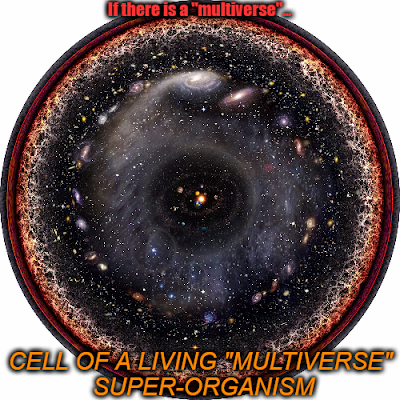
The fact that the Universe is homogeneous and isotropic tells us that the Big Bang happened simultaneously, some 13.8 billion years ago, at all locations equally. But we can’t see it at all locations equally; we can only see it from where we are. Our vantage point is inherently limited. Which is why you often see illustrations like the one below: of our Universe as seen from where we are, and with us at the center.

But this does not mean that the Universe is a sphere! In fact, if we want to know the shape of the Universe, it’s something we can actually measure, and place constraints on. If you walk outside and send two of your buddies in different directions so that you can all see each other, the three of you will form a triangle. Each one of you can measure the angle the other two appear to be at, relative to your point of view. If you then know those three angles, you can add them up: you’d expect them to be 180º, because that’s how many degrees are in the three angles of any triangle.

Any triangle, that is, that’s in flat space.

As it turns out, space doesn’t need to be flat! It could be negatively curved, like the surface of a horse’s saddle, where the angles add up to less than 180º. Or it could be positively curved, like the surface of a sphere, where the angles add up to more than 180º. If you stood on the equator in South America, your friend stood on the equator in Africa and another friend stood at the North Pole, you’d discover that the difference was significant: you’d wind up with a number closer to 270º than 180º. Well, we don’t have friends who can tell us what angles they see in space, but we have something just as good: the fluctuations in the Cosmic Microwave Background, which would have very different appearances depending on what the curvature of space actually is.


Well, we’ve made those observations, and what we’ve found is overwhelming: the Universe is flat, as far as we can tell. Really, really flat. In fact, the latest joint data from Planck and from the Sloan Digital Sky Survey tell us that if the Universe is curved — either positively or negatively — it’s on a scale that’s at least 400 times larger than the part of our Universe observable to us. And that part, the part we can see, is over 92 billion light years across.

So the Big Bang happened everywhere at once, 13.8 billion years ago, and our Universe is spatially flat to the best we can measure it at present. The Big Bang did not happen at a point, and the way we can tell is through the extraordinarily high degree of isotropy and homogeneity of the Universe. (It’s so good that when we notice an inhomogeneity that’s 0.01% of the Universe’s average, we wonder if something’s wrong!) So if you want to assert that the Big Bang happened exactly where you are, and that you’re right at the center of where it all started, no one can tell you that you’re wrong. It’s just that everyone, everywhere, in the entire Universe is just as right as you are when they make that claim, too.

Guns, jobs and angry White men: five reasons Donald Trump could win the White House

ANGRY WHITE MEN

With 100 days to go until the United States decides who will be its next commander-in-chief, Donald Trump's Republican campaign is preparing to launch an attack on five main fronts that he believes will help him win the White House.

As the clock to the November 8 election starts ticking, Mr Trump will travel to key states, seeking to recruit disaffected Bernie Sanders supporters, exploit anger among white working class men, fire up America's huge gun-owning population, capitalise on post-Brexit fervour, and promise jobs.

Hillary Clinton set out her stall last week as the reliable, experienced candidate at the Democratic convention in Philadelphia.

Mrs Clinton can expect a bounce in polls after her convention, but experts increasingly believe the race will go down to the wire in a handful of mostly working class battleground states such as Ohio and Pennsylvania... 

Angry white men

Conventional wisdom has it that the Republicans need to broaden their base to win, reaching out especially to America's growing Hispanic population, and women.

Mr Trump may have already burned those bridges with a series of controversial remarks, but his team believes he can win by doubling down on his core constituencies instead. Democratic strategists fear a whole new wave of first time voters, mostly white men, will go to the polls for Mr Trump.

"There are 100 million couch potatoes," said Mark Penn, Mrs Clinton's chief strategist in her 2008 campaign. "These are people who could vote but don't feel like it. Many of them are working class whites."

Mr Trump, in wild speeches broadcast into their living rooms, will stoke their anger to get them off the couch.

The "angry white men" were out in force at the Republican convention in Cleveland.

Chris, an electrician from Ohio, said he voted for Barack Obama in 2008. Eight years later he was standing outside the Republican convention hall telling a group of anti-Trump protesters to "stay on the other side of the wall".

"There is a war in this country against white, Christian men," he said. "I'll be at the polls, you'd better believe it."

Gun-owners for Trump

Another voting bloc Mr Trump will seek to galvanise is gun owners.

According to one recent study, up to a third of Americans own a gun, many of them Democrats and Independents.

Mrs Clinton felt it necessary to assuage them, saying in her convention speech: "I'm not here to repeal the Second Amendment, and I'm not here to take your guns." 

But many do not believe her. 

For Mr Trump, who has the enthusiastic endorsement of the National Rifle Association, the issue is a open door.

Every time a terrorist attack takes place around the world over the next three months, he intends to loudly reaffirm his view that Americans should own more guns, not less, and that it will make them safer.

"I'd vote for a Democrat if they had a decent candidate," said one man legally carrying a rifle in the street in Cleveland. "Gun owners are not irrational people. I'm a normal guy, I'm not some crazy dude, and there are lots of us."

Jesse Gonzales, 26, who was carrying an AK-47 assault rifle, added: "This isn't just about guns, it's about Constitutional rights. Where does it stop if Hillary takes the guns? Trump will protect our rights."

The Brexit model

As he seeks to show his supporters that the unlikely is possible in an election, Mr Trump intends to regularly invoke Brexit, describing how the Brexiteers "took back their country".

Some of the same factors that powered the Leave movement in Britain are on display in America, namely a disdain for the establishment and concerns over unfettered immigration. Brexit earned several mentions at the Republican convention, and each time there was sustained applause.

And, like Brexit, Mr Trump believes his side will be more motivated than the opposition. His campaign thinks polls may be underplaying his support by several points.

*********************

ENTIRE ARTICLE HERE.

Bavaria Leader Rejects Merkel’s ‘We Can Do This’ Migrant Mantra

WE CAN COMMIT WHITE GENOCIDE

(REUTERS) – Bavaria’s premier, whose state bore the brunt of recent attacks in Germany, took aim at Chancellor Angela Merkel’s open-door refugee policy on Saturday by rejecting her we can do this mantra.

The comments from Horst Seehofer, whose Christian Social Union is the Bavarian sister party of Merkel’s conservatives, exacerbate the chancellor’s difficulty in standing by a policy that her critics have blamed for the attacks and which risks undermining her popularity before federal elections next year.


“‘We can do this’ – I cannot, with the best will, adopt this phrase as my own,” Seehofer told reporters after a meeting of his party.


Five attacks in Germany since July 18 have left 15 people dead, including four assailants, and dozens injured. Two of the attackers had links to Islamist militancy, officials say. Germany is wrestling with how to respond.

Jens Spahn, deputy finance minister and a senior member of Merkel’s conservatives, said that integrating the refugees was a Herculean task but the government needed to put more pressure on those new arrivals unwilling to make an effort to fit in.

“A ban on the full body veil – that is the niqab and the burka – is overdue,” he told daily Die Welt. “My impression is that we all underestimated a year ago what would come upon us with this big refugee and migration movement.”

Over a million migrants have entered Germany in the past year, many fleeing war in Afghanistan, Syria and Iraq.

In an editorial, magazine Der Spiegel noted that the government of Helmut Schmidt, who served as chancellor from 1974 to 1982, toughened laws to combat the ultra-leftist Red Army Faction, which attacked the political and business elite, but added: “the terrorists nonetheless carried on bombing.”

The comments from Seehofer, who said following the latest attacks that “all our predictions have been proven right”, came after Merkel on Thursday defiantly repeated “we can do this” and vowed not to bend her refugee policy.

“The problem is too big for that and the attempts at a solution thus far too unsatisfactory,” said Seehofer. “Restrictions on immigration are a condition for security in this country.”

Merkel on Thursday set out a nine-point plan to respond to the attacks, including an early warning system for the radicalisation of refugees.

She faced criticism on social media after failing to react until the next day to the bloodiest of the attacks, in Munich, where an 18-year-old German-Iranian gunman killed nine people.

Pro-White patriots march in Berlin under the slogan "Merkel has to go"


Hundreds of pro-White patriots marched through Berlin on Saturday (July 30) to demand the resignation of Chancellor Angela Merkel over her open-door invasion policy. The demonstration takes places only days after the German leader had to face down accusations at home and abroad that her open-door, White genocide invasion policy allowed Islamist terrorism to take hold in Germany. Five attacks have been committed since July 18 in Germany and have left 15 people dead -- including four attackers -- and dozens injured. The attacks have burst any illusions in Germany that the country is immune to attacks like those claimed by Islamic State in neighboring France. Politicians from left and right say Merkel's refugee policy is at fault, after more than a million migrants entered Germany in the past year, many fleeing war in Afghanistan, Syria and Iraq. Merkel's popularity, already eroded by the refugee crisis, is likely to suffer again after a temporary boost following Britain's vote last month to escape the ZOG European Union.

29 July 2016

Pro-White Candidate Leads in New Austria Race for Presidency – Poll

Austrian Freedom Party (FPO)’s candidate Norbert Hofer holds a 4-point lead over his rival and the former president-elect in the new race for presidency, a pre-election poll showed Friday.


MOSCOW (Sputnik) – Alexander Van der Bellen, a Green-backed independent, narrowly fraudulently defeated Hofer in the presidential run-off in May after finishing second in the first round. But the result was voided in July over (((irregularities))) in counting postal votes.

The first opinion poll by Gallup, commissioned by the Oesterreich newspaper, found that 52 percent of respondents would vote for Hofer and 48 percent for Van der Bellen.


The October 2 rerun could produce the European Union’s first far-right pro-White head of state in recent history amid invasion concerns. During his election campaign, Hofer called for more curbs on invader arrivals and stricter invasion rules.

28 July 2016

Hungary’s prime minister says migrants are a “poison” and his country doesn’t need any


Hungary’s pro-White prime minister, Viktor Orbán, said on Tuesday (July 26) that the influx of invaders in Europe is a poison,” and his country doesn’t need them, AFP reports.

“Hungary does not need a single migrant for the economy to work, or the population to sustain itself, or for the country to have a future,” he said during a joint press conference in Budapest with Austrian Chancellor Christian Kern. (His stance is belied by numbers showing a dearth of skilled labor (link in Hungarian): 350,000 Hungarians under 40 with a high level education left the country in last 25 years or so.)

Orbán has been making anti-migrant comments, verbally and on giant billboards, since the invader crisis peaked last summer.

At an event in Baile Tusnad, Romania, an area with a large Hungarian population, Orbáan said (link in Hungarian) “migration is killing us,” and he expressed his admiration for the American Republican presidential candidate Donald Trump’s rhetoric. “I listened to [Trump] and I have to tell you that he made three proposals to stop terrorism,” he said. “And as a European, I myself could not have drawn up better what Europe needs.”

Orbán also made the argument that Europe is for Europeans in religious terms. “Is it not worrying in itself that European Christianity is now barely able to keep Europe Christian?” he asked. “There is no alternative, and we have no option but to defend our borders.”

Hungarians will vote in a referendum on Oct. 2 on whether to accept quotas for resettling invaders currently held in camps, which the EU plans to impose on most member states. If it refuses the quotas, Hungary could face EU-imposed financial charges—€250,000 ($278,000) per invader—for refusing to accept its share of invaders, and could also end up forgoing additional aid from the EU to support invaders.

As Orbán continues to make anti-invasion statements, the fate of the estimated 1,294 invaders in camps whose future will be determined by the vote remains far from certain.

Welcome to the White nationalist Republican party

AND TO THE CUCKS WHO DON'T LIKE IT: THE EXITS ARE CLEARLY MARKED.


The death of one party, the birth of another

After Donald Trump’s acceptance speech at the Republican National Convention last week, Nicolle Wallace, a longtime GOP strategist, had a memorable exchange with NBC’s Chuck Todd.
WALLACE: [T]he Republican Party that I worked for for two decades died in this room tonight. We are now represented as a Party by a man who believes in protectionism, isolationism, and nativism. And those were the forces that George W. Bush, and I believe John McCain too, were most worried about during their times as the leaders of the Republican Party.

CHUCK TODD: Striking comment. You believe the party died tonight?

WALLACE: Well, the voters picked this guy. This is where the Republican Party is now. They now are attracted to those forces of isolationism and protectionism. But the party I was part of for two decades is dead.
If you feel as if you’ve run into that sentiment and that phrasing quite a bit lately, it’s not your imagination. The headline of David Brooks’ New York Times column last week read, “The Death of the Republican Party.” Max Boot recently published an L.A. Times piece with the headline, “The Republican Party is dead.” The Washington Post’s Michael Gerson, George W. Bush’s former chief speechwriter, wrote last month that the Party of Lincoln “is dying.”

After the GOP’s presidential nominating process wrapped up in May, the New York Daily News ran a cover with a cartoon elephant in a casket. “Dearly beloved, we are gathered here today to mourn the GOP, a once-great political party, killed by epidemic of Trump,” the cover told readers.


It’s important to define our terms a bit, because it’s easy to misunderstand what these observers mean by “dead.” The Republican Party will, of course, continue to exist no matter what happens in the 2016 elections. When commentators refer to the GOP’s “death,” they’re not talking about its disappearance from the political landscape.

Rather, this is about the passing of a major party as we understand it, giving way to something new. The Republican Party, as an institutional entity, isn’t going anywhere, but it’s nevertheless transforming into something different from what Americans have been accustomed to.

Avik Roy, a Republican health care wonk with whom I’ve disagreed many, many times, has been deeply involved in GOP politics for many years. He spoke to Vox yesterday about the state of his party and the degree to which, as Vox put it, Republicans are “driven by white nationalism rather than a true commitment to equality for all Americans.”
“I think the conservative movement is fundamentally broken,” Roy tells me. “Trump is not a random act. This election is not a random act.” […]

“Conservative intellectuals, and conservative politicians, have been in kind of a bubble,” Roy says. “We’ve had this view that the voters were with us on conservatism – philosophical, economic conservatism. In reality, the gravitational center of the Republican Party is white nationalism.”
In the same interview, he added, “It’s a common observation on the left, but it’s an observation that a lot of us on the right genuinely believed wasn’t true – which is that conservatism has become, and has been for some time, much more about white identity politics than it has been about conservative political philosophy. I think today, even now, a lot of conservatives have not come to terms with that problem.”

New York’s Jon Chait made a related point last week, reflecting on the GOP convention, explaining Trump’s rise as part of the Republican Party’s transition from a conservative party into an explicitly ethno-nationalistic, “white-identity-politics” party.

Clare Malone recently argued something similar at FiveThirtyEight, explaining the degree to which the GOP’s small-government ethos has been completely replaced by the politics of “racial and cultural resentment.”

When Republicans talk about the death of their party, I think this is ultimately what they’re referring to. Sure, some of these trends and ideas have been part of the GOP’s diaspora for years, but what’s new – what marks the death of one party and the birth of another – is the way in which Republicans in 2016 have come to define themselves, not by principles of equal opportunity and the free market, but by the ethno-nationalistic tenets the party has traditionally tried to suppress.

Those efforts have failed. It’s a new Republican Party now.

27 July 2016

Milky Way's spinning 'halo' helps reveal how galaxy formed


A team of astronomers led by researchers at the University of Michigan have uncovered a new feature about our galaxy.

The Milky Way galaxy is ensconced within “a halo of diffuse, star-forming material called plasma” that reaches temperatures of a million degrees, reported Gizmodo.

Previous research indicated that this plasma remained stationary, but this new study indicates the halo is spinning around the Milky Way at a staggering 400,000 miles per hour.

This research project, funded by NASA, examined archival data obtained by the European Space Agency’s XMM-Newton Telescope. The idea was to understand how light from the halo becomes bent and distorted after traveling millions of light years to reach our eyes, according to Gizmodo.

Changes in hot oxygen atoms were used to measure this light distortion where results revealed the halo was spinning at a tremendous velocity.

Understanding the direction and speed of the spinning halo could help astronomers learn how different forms of matter arrived and transformed into stars, planets, and other celestial bodies along with analyzing how our galaxy could evolve.

Sen. Lindsey Graham: ‘No time to nickel and dime Israel’

‘No time to nickel and dime Israel’

The authoress, Jennifer Rubin, complains Israel is not getting enough from its "best friend" the United States

Sen. Lindsey O. Graham (R-S.C.) sounded irate in a brief phone interview Monday afternoon with Right Turn. His subcommittee, with strong bipartisan support, has already passed legislation to hike military aid to Israel from $3.1 billion to $3.4 billion for 2017. But as has been reported in Israeli papers, the administration — with one more kick in Israel’s shins before President Obama leaves office — has told Israel there will be no increase this year or in a new 10-year memorandum of understanding (MOU). Moreover, the long-standing offshore procurement (OSP) agreement that allows Israel to purchase a significant percentage of its defense equipment from Israeli companies may get nixed or squeezed.

Haaretz reports that Israel is “giving up” many requests, which is a polite way of saying the administration is refusing to bolster aid to Israel despite a vast increase in weaponry acquired by Hezbollah and new aid flowing into Sunni neighbors:

[Prime Minister Benjamin] Netanyahu is leaning towards giving up most of his demands and plans to acquiesce to the majority of American conditions for the new aid package. These include a gradual phasing out of Israel’s spending of up to 40 percent of American aid on purchases from Israeli defense contractors and for fuel.

But Judeo-plutocratic Whore Lindsey Graham is fine with the nickel and diming of the American people

“Israel places great importance on its ability to plan and to have certainty regarding the military aid it receives from the U.S., as well as respecting bilateral agreements,” the statement from the Prime Minister’s Office said.

This comes in the context of a 10-year funding agreement set to expire in 2018. Haaretz explains, “After a few rounds the talks ran aground in May. The Americans made clear that their offer was final and it was up to Israel whether to sign while President Barack Obama is still in office or wait for the next president to take office in January 2017.” The administration also wants to include missile defense spending within the next 10-year deal, thereby curtailing another avenue for funding.

According to Graham, Israel is not voluntarily “giving up” its request but is being strong-armed by the administration to back away. Now is not the time to nickel and dime Israel,” Graham says tersely. “This is totally out of sync with what is happening in the region.” He notes the huge buildup in Hezbollah forces after the Iran deal and the presence of Russian and Iranian forces in Syria.

As important as the dollar amount in aid to Israel is the provision that allows Israel to buy from its own defense industry. Those familiar with the issue tell Right Turn this allows Israel to keep its defense industry robust and to innovate on its own. Since we share defense intelligence and know-how with Israel, this ultimately redounds to our benefit as well.

Graham notes that Jordan, for example, has enjoyed increases in aid in two of the past three years. “I wish Obama would have been as tough on Iran as he is on Israel,” he says in reference to the Joint Comprehensive Plan of Action (JCPOA). Graham underscores that Congress is not party to any MOU and can appropriate whatever amount it sees fit. Congress therefore may still insist on the higher spending number in the next omnibus spending bill (or continuing resolution). And the next president of course can renegotiate all of this.


Graham nevertheless vows to take new steps. He plans on working with other lawmakers including Sen. Kelly Ayotte (R-N.H.) to reverse sanctions relief and/or impose new sanctions on Iran in light of its illegal missile tests. He also says he plans on pushing through a supplemental funding bill. “Shouldn’t Israel get 1 percent of what Iran got?” he asks, arguing that $150 billion was released to Iran in the context of the JCPOA. He therefore plans on putting in another $1.5 billion for Israel in light of the increased dangers he thinks the JCPOA helped create.

If nothing else, this latest fight should remind voters that this administration has gone out of its way to complicate Netanyahu’s and Israel’s security needs. As has so often been the case when the administration has slighted allies, Russia takes advantage. A separate news report tells us: “Netanyahu persisted in complaining again about the Russian arms reaching the Lebanese terrorist group in his latest phone conversation with Putin on Saturday, July 23. He made the call . . . primarily to raise another topic at issue, the UAV (Unmanned Aerial Vehicle) flights from Syria into Israeli airspace on July 17.”

In short, as Russia and its allies tip the balance of power in the Middle East, the United States retreats and undercuts its closest ally Israel. Perhaps the next administration will understand the mutually beneficial alliances we enjoy with individual countries and with multilateral organizations.