Featured Post

Amazon Banned My Book: This is My Response to Amazon

Logic is an enemy  and Truth is a menace. I am nothing more than a reminder to you that  you cannot destroy Truth by burnin...

27 February 2021

Russia, China to sign agreement on international lunar research station

Russia opts for lunar project with China over continued cooperation with ISS partners beyond LEO

HELSINKI — Russia is preparing to sign a memorandum of understanding with China to cooperate on a vision for an international lunar research station.

“Roscosmos has completed domestic proceedings to harmonize the Memorandum of Understanding between the Government of the Russian Federation and the Government of People’s Republic of China on cooperation to create the International Lunar Research Station,” Roscosmos Press Office told SpaceNews in an email.

“The date to sign the above mentioned MoU has not been determined yet and is currently discussed with the Chinese partners,” Roscosmos said. An Order of the Government of the Russian Federation relating to the move was published online Feb. 11.

Roscosmos press office said the official announcement of the plans to create the International Lunar Research Station is planned to coincide with one of the upcoming international events. St. Petersburg is due to host the Global Space Exploration Conference 2021 in June.

Roscosmos did not provide requested further details on the makeup of, nor contributions to the International Lunar Research Station.

The ILRS is understood to be a Chinese-developed vision for a robotic base at the lunar south pole. The first steps will be the upcoming Chang’e-,6, -7 and -8 missions and international missions such as Russia’s Luna 27. In the early 2030s an expanded ILRS will involve long-term robotic and potentially short-term crewed missions. A long-term human presence at the lunar south pole is the goal for 2036-2045. 

The project, at this early stage, would appear to consist of Chinese, Russian and potentially other nations contributing their own, discrete spacecraft. This would be in contrast to a more complex, integrated program such as the International Space Station.

ILRS objectives include “construction and operation of human[ity]’s first sharing platform in the lunar south pole, supporting long-term, large-scale scientific exploration, technical experiments and development and utilization of lunar resources’, according to a 2020 presentation to the Scientific and Technical Subcommittee of the Committee on the Peaceful Uses of Outer Space (COPUOS) by the Lunar Exploration and Space Engineering Center under the China National Space Administration (CNSA).

From Gateway to China-Russia lunar station

The development follows Russia opting not to join eight nations, including the U.S., in signing on to the Artemis Accords last October. The Accords are a set of principles and norms for those who want to participate in the NASA-led Artemis lunar exploration program.

Bleddyn Bowen, a lecturer in international relations at the University of Leicester in the United Kingdom, told SpaceNews that the development is not such a surprise, given that Russia has always been lukewarm to the Lunar Gateway, part of the Artemis program, and this will have been factored in. However the project will still suffer from the loss of Russian expertise.

Bowen sees the move from Russia as an ISS partner to working more closely with China in lunar exploration rather than ISS partners is part of wider space-related and geopolitical shifts, particularly since the outbreak of the Ukranian conflict.

“This MoU fits the larger trend, which is Russia moving into a closer orbit with China,” says Bowen, adding that this more formal agreement builds on existing cooperation in material science, data sharing, purchase agreements and lunar exploration.

Bowen cautions however that this is “just a memorandum of understanding, so we’ll have to wait and what, if anything, comes from this”. 

Zhang Ming, a researcher on international security and space issues at the Shanghai Academy of Social Sciences, told SpaceNews both China and Russia, who have long cooperated in space, have difficulties in working with the U.S. for different reasons. Zhang notes that Russia had expressed concerns that Artemis was too “U.S.-centric” and she would expect “more and more space and lunar cooperation between Russia and China” if the “United State continues its space policies and practices without any change.”

“The U.S. advances its space agenda aggressively and sometimes unilaterally in recent years despite the concerns of the rest [of the] world, which made China and Russia very worried. The mistrust and skepticism towards U.S. motives will promote China and Russia to further their space cooperation,” Zhang said.

Roscosmos chief Dmitry Rogozin last year told Russian media China and Russia had agreed they will “probably” build a moon research base together, following talks with Director of the China National Space Administration Zhang Kejian.

Brian Weeden of the Secure World Foundation also believes the split has been coming for sometime, citing the Ukraine invasion and 2016 election interference. “I think we’re at a much different US-Russia space relationship than we had for the past few decades.”

“I don’t think it’s going to have a serious impact on Artemis. Russia indeed has some experience in robotic lunar landers but no human spaceflight experience and their space sector has been declining for some time,” says Weeden. “The space partnership with Russia in the ISS was driven more by national security and foreign policy reasons than a need to have Russian expertise. It’s useful, but not critical.”

The European Space Agency has also been involved in discussions, while recently having signed an MoU with NASA on the Gateway. “At ESA we are following the Chinese lunar exploration plans very closely in order to see where our respective programmatic interest could meet, primarily the CE-6, -7 and -8 missions but also the ILRS initiative”, Karl Bergquist, ESA’s international relations administrator, told SpaceNews last year.

From Chang’e to ILRS

The ILRS is an evolutionary, expanded stage of Chinese lunar exploration following the approval of a first set of missions in the early 2000s. China has since launched two lunar orbiters, a pair of lander and rover missions and, in late 2020, the complex Chang’e-5 lunar sample return mission.

Chang’e-6, a polar sample return mission, and the multi-spacecraft Chang’e-7 are scheduled for around 2023-2024. The later Chang’e-8 mission will be designed for in-situ resource utilization and 3D-printing technology tests, as well as life science related to potential long-term stays on the moon. These missions will form the robotic basis of the ILRS before expansion into more long term base.

China is also developing capabilities for deep space human spaceflight. In May 2020 China tested a new generation spacecraft and is also developing a super-heavy-lift launcher for space infrastructure and lunar missions. A new, three-core launcher for potential crewed lunar missions is also in development.

18 February 2021

NASA Mars rover landing seeks cosmic life

The organic cosmos...

…begotten by the Big Seed.

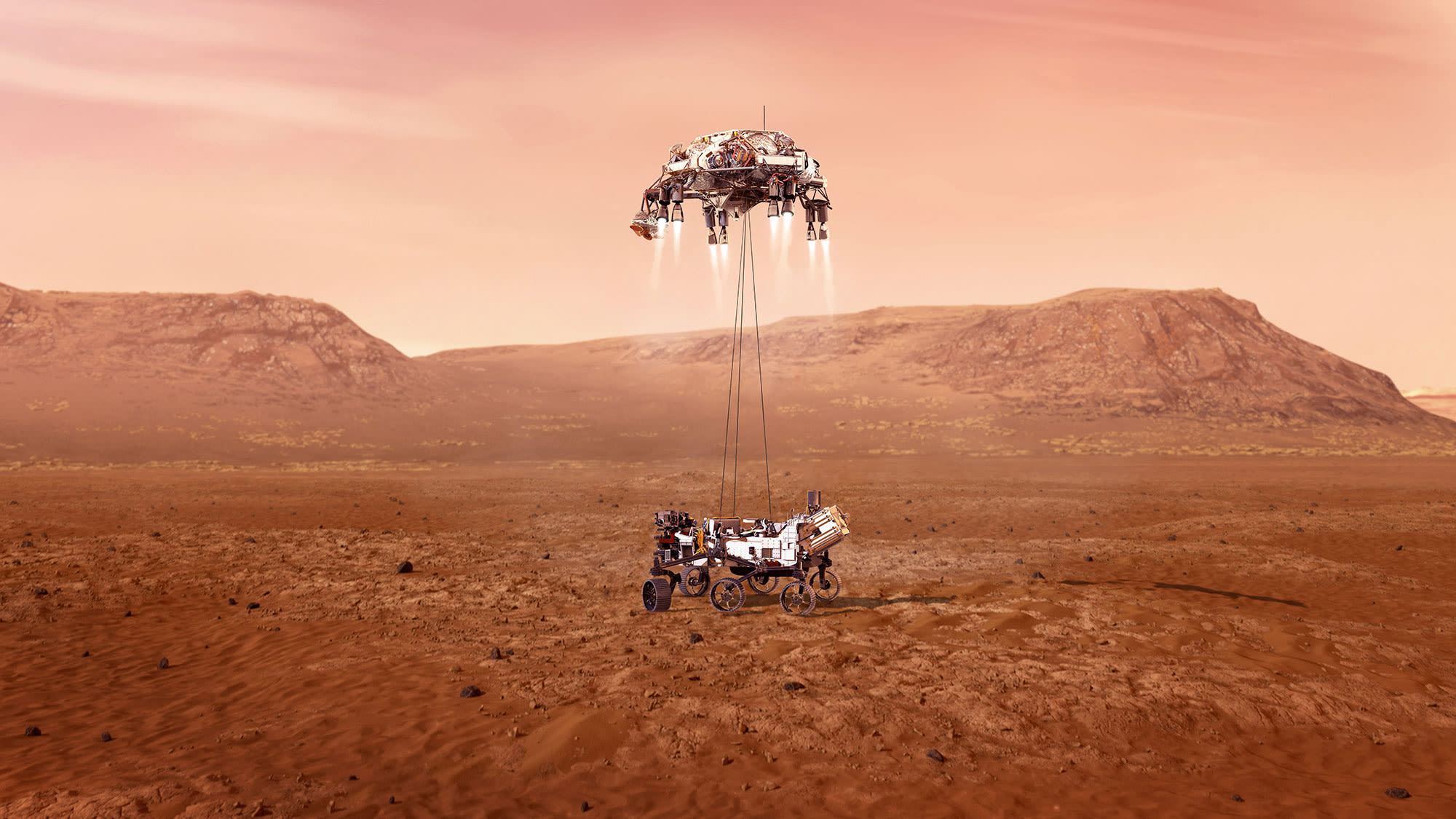
UPDATE (Feb. 18, 2021, 4:00 p.m. ET): On Thursday, Perseverance successfully touched down on Mars, kicking off a two-year mission to roam its surface and search for signs of ancient microbial life.

NASA is reprising an old quest: a search for life on Mars.


The hunt for red planet residents began close to four decades ago, when the agency sent two spacecraft — the Viking landers — to Mars. Their task was to prove that the planet, while red, is not dead.

The landers initially sent back data that seemed consistent with bacteria-like organisms in the soil. But with further analysis, early optimism soured. Was there life on Mars? NASA concluded: Probably not.

This wishy-washy answer was frustratingly ambiguous, especially for a $1 billion experiment. So, NASA is now taking a different approach in its hunt for microbes. Unlike the Viking landers, the new Perseverance rover isn’t looking for chemical signs of metabolism. Instead, Perseverance will trundle around Mars’ gaunt landscapes searching for sediments. These could contain clues to organisms that pitched and swirled in long-vanished seas.

The rationale is simple: If Mars ever had life, the dead will surely outnumber the living, and are therefore more likely to be found. The proposed landing site for Perseverance, Jezero Crater, looks like a former lake basin fed by a dried-out river, a happy hunting ground for a rover prowling for the desiccated remains of early inhabitants.

The samples cached by Perseverance will hopefully be collected and returned to Earth by a future mission, to be analyzed in terrestrial laboratories. There will be no “Eureka” moment for Perseverance; if Martians are found, they will be found on Earth.

But if it that happens, it will be more than an interesting science story. Just as the past is now divided into “before” and “after” the Copernican revolution, so too will discovering long-expired Martian bacteria permanently change humanity’s view of its own importance.

There is, however, one thing that could dampen the impact of finding (dead) life on Mars. If it turns out that Martian organisms were related to Earthly life — if both sport the same DNA biology — then the discovery may point to the way life can accidentally spread between worlds, hitchhiking on dirt clods kicked into space by meteor impacts. That would be interesting, yes. But far more portentous would be to discover that our solar system has had a “second genesis”; that life on Earth and Mars had different origins. That would imply that life is as commonplace in the cosmos.

If so, it would be a near-certainty that in other places among the trillion planets of the Milky Way, life has evolved to a state of self-aware intelligence. Simply getting life started doesn’t guarantee this; there would surely be manifold worlds where life stalls out as pond scum. But that cannot be the case for every planet or moon that spawns biology. Intelligence has survival value.

So, finding Martian life should compel us to abandon the notion that we are privileged, that humans are the sole sentient inhabitants of the universe. Indeed, we would not only have a strong indicator of cosmic company but could infer that it is widespread. It would include beings that are far beyond our own technical level, given that the Sun and its planets are relative newcomers to the universe, billions of years younger than the average solar system.

Such a realization would be as consequential to our self-image as when we learned that we are not separate from the fauna of our world, but simply a part of it.

Suddenly, we would confront the likelihood that everything we accomplish has parallels in the actions of unseen others, and that what we find beautiful and worthwhile must have a billion other definitions elsewhere. Scientists, who find joy in being the first to know something, would realize that countless other beings have learned it too. We could be certain that there are vast libraries of knowledge that we cannot enter.

And what of religion? Theology has famously railed against earlier scientific discoveries that seemingly diminished our central position in the cosmos, from Galileo to Darwin. How would it react to learning that not only is our planet not unique, but neither are its most celebrated inhabitants?

A Survata poll from 2013 suggests the response might be more positive than we think. According to the poll’s respondents, up to one-third of the members of major western religions may already believe in extraterrestrial life. Even the Catholic Church, notorious for censuring Galileo, is accepting of at least the possible existence of sentient beings elsewhere in the universe. (Pope Francis has specifically expressed his willingness to baptize Martians.)

Perseverance could put us back on a road long traveled. In the 18th century, telescopes became powerful enough to discern the polar ice caps and surface markings on Mars. The red planet was the only world we knew where conditions might be similar to those on Earth. This likeness launched a durable belief in Martian life, and the Perseverance rover is the latest gambit by science to hunt it down, dead or alive.

But what may seem like a straightforward pursuit of a long-standing hypothesis would — if successful — have implications of great philosophical consequence. Protagoras wrote that man is the measure of all things. But thanks to some high-tech hardware lumbering across the dusty sands of a nearby world, that might soon cease to be true.

----------------------

The cosmic Brotherhood of Sentience: intelligence / abstract contemplation = highest end / final cause - regardless of particular species or point of cosmic origin.

13 February 2021

Female Judge Strikes Blow Against Orthodox Jewish Male Privilege: Empowers Black and Brown Parents on East Ramapo School Board

"Hoisted by your own petard":

"Hoist with his own petard" is a phrase from a speech in William Shakespeare's play Hamlet that has become proverbial. The phrase's meaning is literally that a bomb-maker is blown up by his own bomb, and indicates an ironic reversal, or poetic justice.

For more than a decade, most of the school board members have been strictly Orthodox Jewish men. They steered more money to school buses, textbooks and special education services for private yeshivas. All the while, the board made drastic cuts to public schools - from laying off teachers and social workers to reducing kindergarten hours and gutting school supplies. “It got so bad, at one point, children were coming home—little girls were coming home, saying ‘I don't go to the bathroom because there's no toilet paper,’" said Willie Trotman, president of the NAACP’s Spring Valley chapter.

“It’s not because we don’t like these people,” said Luis Nivelo, a public school parent, referring to the Orthodox communityJews. But he said it’s people on the board “who destroy our schools.”  And he said extra state funds that were allocated in recent years weren’t sufficient. “They give us a piece of cookies,” he said, adding “we deserve equality in education, because we are human beings.”


Full article available: here.

12 February 2021

Portrait of young galaxy throws theory of galaxy formation on its head

Speedy galaxy evolution:

Summary


The processes that transformed small, turbulent, relatively unstructured protogalaxies into rotating spiral or giant elliptical galaxies are not well understood. Most galaxies are expected to go through a spiral-like phase, maturing into an elliptical structure. Many local spiral galaxies have a classic rotating disk of young stars as well as a “bulge” of older red stars at their centers; these two features are considered to be signatures of galaxies that have evolved from their original primordial forms. Unfortunately, these features are challenging to directly detect, particularly in the very distant (i.e., early) Universe. On page 713 of this issue, Lelli et al. (1) report a galaxy that had evolved features (both a disk and a bulge) when only 1.2 billion years had elapsed since the Big Seed (∼12.5 billion years ago) (see the figure). This finding suggests that the processes that generate the key features of a mature galaxy arose more rapidly than has been thought.


View Full Text

_______________________________

Portrait of young galaxy throws theory of galaxy formation on its head:

Scientists have challenged our current understanding of how galaxies form by unveiling pictures of a young galaxy in the early life of the Universe which appears surprisingly mature.

The galaxy, dubbed ALESS 073.1, appears to have all of the features expected of a much more mature galaxy and has led the team of scientists to question how it grew so fast.

The new research has been published today in Science.

Galaxies come in a variety of shapes, sizes and colours, and are made up of different components such as rotating disks, spiral arms, and "bulges".

A major goal of present-day astronomy is understanding why different galaxies look the way they are today and when their different components formed.

The team, led by scientists at Cardiff University, used the Atacama Large Millimeter/submillimeter Array (ALMA) telescope as a 'time machine' to peer into the remote past, revealing how ALESS 073.1 looked just 1.2 billion years after the Big Seed.

Because the light emitted from the galaxy took billions of years to reach our telescopes on Earth, the team were able to explore how the galaxy looked during its infancy and determine how it was initially formed.

The result was one of the sharpest, direct images of a primordial galaxy ever produced which allowed the team to undertake a detailed study of its internal structure.

"We discovered that a massive bulge, a regular rotating disk, and possibly spiral arms were already in place in this galaxy when the Universe was just 10% of its current age," said lead author of the study Dr. Federico Lelli, who undertook the work at Cardiff University's School of Physics and Astronomy.

"In other words, this galaxy looks like a grown adult, but it should be just a little child."

Co-author of the study Dr. Timothy Davis, from the School of Physics and Astronomy, said: "This spectacular discovery challenges our current understanding of how galaxies form because we believed these features only arose in "mature" galaxies, not in young ones."

One key feature of a galaxy is the presence of a so-called bulge—a tightly packed group of stars usually situated within the centre of the galaxy.

It was believed that massive bulges formed slowly by the merger of smaller galaxies or by specific processes that occurred within the galaxy itself; however, the kinematic properties of ALESS 073.1 have revealed that the formation of massive bulges can occur extremely fast—around half of the stars in the galaxy were shown to be in a bulge.

Similarly, some mature galaxies, like our own Milky Way, have been known to have spiral arms extending from their central parts, giving them a distinctive spiral shape.

Similar features were also unexpectedly spotted in ALESS 073.1, much to the team's amazement, as early galaxies are generally thought to be chaotic and turbulent rather than having regular, well-organized structures like spiral arms.

"A galaxy like ALESS 073.1 just defies our understanding of galaxy formation," concluded Dr. Lelli.

07 February 2021

The global Judeo-plutocracy lies - literally - from the Beginning...

Simply make the following three touchstone translations, and Judah's Gordian knot of satanic lies is forevermore cut:

  1. "Big Bang" = Big Seed;
  2. "violently exploded" = teleologically sprouted;
  3. "this explosion, this bang" = this sproutling, this seed:

Origins of the Universe: Advanced Seminar.

04 February 2021

Occupation regime rag New York Times calls for 'reality czar' to fight 'disinformation'


As someone once said, "truth is whatever the best liar says it is."


The money-power elite have literally imposed upon our minds their own self-serving reality-paradigm, and ordinary people do not - or rather, did not - even get it. But now, there can be no mistake: If ever there were, there are no longer any differences between the Government and organized crime.


Meanwhile...

The postmodern enclosure movement moves us yet another step closer to a return to feudalism:


Nevada bill would allow tech companies to create governments:


CARSON CITY, Nev. (AP) - Planned legislation to establish new business areas in Nevada would allow technology companies to effectively form separate local governments.

Democratic Gov. Steve Sisolak announced a plan to launch so-called Innovation Zones in Nevada to jumpstart the state’s economy by attracting technology firms, Las Vegas Review-Journal reported Wednesday.

The zones would permit companies with large areas of land to form governments carrying the same authority as counties, including the ability to impose taxes, form school districts and courts and provide government services.

The measure to further economic development with the “alternative form of local government” has not yet been introduced in the Legislature.

Sisolak pitched the concept in his State of the State address delivered Jan. 19. The plan would bring in new businesses at the forefront of “groundbreaking technologies” without the use of tax abatements or other publicly funded incentive packages that previously helped Nevada attract companies like Tesla Inc.

Sisolak named Blockchains, LLC as a company that had committed to developing a “smart city” in an area east of Reno after the legislation has passed.

The draft proposal said the traditional local government model is “inadequate alone” to provide the resources to make Nevada a leader in attracting and retaining businesses and fostering economic development in emerging technologies and industries.

The Governor’s Office of Economic Development would oversee applications for the zones, which would be limited to companies working in specific business areas including blockchain, autonomous technology, the Internet of Things, robotics, artificial intelligence, wireless, biometrics and renewable resource technology.

Zone requirements would include applicants owning at least 78 square miles (202 square kilometers) of undeveloped, uninhabited land within a single county but separate from any city, town or tax increment area. Companies would have at least $250 million and plans to invest an additional $1 billion in their zones over 10 years.

The zones would initially operate with the oversight of their location counties, but would eventually take over county duties and become independent governmental bodies.

The zones would have three-member supervisor boards with the same powers as county commissioners. The businesses would maintain significant control over board membership.

The governor’s economic development office did not respond to questions about the zones Wednesday.

Usurper Joe & His Wrecking Crew


Serfdom Redux

31 January 2021

TESS reveals triple-binary eclipsing star system & Sun-like star with extremely close exoplanets

The first-discovered triple-binary sextuple star system and a Sun-like star with five exoplanets orbiting within the distance of Mercury are just two recent examples of the extraordinary systems being investigated and discovered by scientist using data from the Transiting Exoplanet Survey Satellite, or TESS.

The joint NASA-Massachusetts Institute of Technology (MIT) mission is the cornerstone of two recently presented discoveries that characterize two tantalizing systems and their benefit to understanding stellar system formation.

A sextuplly-eclipsing sextuple system

Finding a system with six stars is rare to begin with.  Finding such a system with three sets of binaries, all of which are eclipsing binaries when viewed from Earth is even more rare. 

In fact, TYC 7037-89-1 is the first star system ever discovered to fall into such a category — though 17 other sextuple star systems have already been observed.

The discovery from a team led by NASA’s Brian Powell (Powell et al.) stems from the primary nature of the TESS mission, which is to continuously observe a large portion of the sky for month-long intervals at most searching for the telltale change in brightness coming from stars. 

This design is meant to find exoplanets transiting their host stars in relation to TESS’s field of view; the telescope is therefore perfectly primed to detect the changes in brightness that occur when two stars of the same system eclipse one another.


The TYC 7037-89-1 system had been observed previously, but its true nature had evaded detection until Sector 4 and 5 observations during Cycle 1 of TESS investigations which placed the system in the telescope’s field of view.

Based on information extracted from the test light curves and follow-up observations not just from TESS but other telescopes as well, scientists were able to show that the six stars are arranged in three binary groups, with an inner grouping of two binaries and an additional outer binary.

The outer binary is known as binary B, while the inner binary pair are known separately as A and C.

The inner binaries A and C orbit each other every 3.7 years while the outer binary, B, orbits the inner binaries every 2,000 years.

Within each binary, the orbital periods of the stars were calculated as: 
  • Binary A: 1.570 days
  • Binary C: 1.306 days
  • Binary B: 8.217 days
When investigating other systems, the letter/number convention can often appear confusing, as it does here where the inner binaries are A and C while the outer binary is B. This arises from the fact that alphanumeric designations are given in order of discovery and are not based on intra-system relationship or distance from the center of a system.

[LARGE SECTION OF ARITICLE OMITTTED]

Additional observations of the system will have to be made to either confirm the exoplanet candidate or dismiss it. 

Nevertheless, a completely different observation of the system from a different team using the European Space Agency’s CHEOPS planet hunting satellite did find a fifth planet in the system, though not the potential one identified by TESS.

This confirmed exoplanet, HD 108236 f, orbits every 29.5 days and is still well within the orbit of Mercury when compared to our solar system. The paper for this discovery can be found here.

Luckily, the system’s proximity to Earth and the parent star’s brightness makes this a highly accessible target for such observations, as well as those for mass measurement, photometric assessment, atmospheric characterization, and search for additional planets.

The paper from Daylan et al. on this discovery is published in The Astronomical Journal and is available here.

24 January 2021

May 14, 2020: Sen. Hawley calls for special counsel to probe Obama administration: 'The more we learn, the worse it gets' // May 25, 2020: George Floyd incident used as pretext by elites to effect social transformation

  • May 14, 2020: Sen. Hawley calls for special counsel to probe Obama administration: "The more we learn, the worse it gets."
  • May 25, 2020: George Floyd incident used as pretext by elites to effect social transformation.

And the Obama probe was aborted.

---------------------

THE FUN STARTS AT 43:48 OF THE VIDEO

16 January 2021

Other realities are possible

“Equality” = entropy/atrophy. “Multiculturalism” = divide & conquer. “Diversity” = balkanization. “Anti-Semite” = victim of organized Jewry. White self-determination = domestic terrorism. Free speech = hate. We are going straight into South Africa. BLM is the ANC. The Republican Party is going to commit suicide ala F. W. de Klerk. You will never again see a Republican president, and if DC and Puerto Rico add four permanent Democratic seats to the senate – and given the imminent, transformational demographic avalanche – you will never again see a Republican senate. The House may fall to the Republicans in 2022, and they’ll use that one last card to fatten themselves up in gated communities protected by armed guards, courtesy of your tax money, while the slaughter of Whites escalates all around them. And they won’t give a fuck.

We need a White secessionist party, and we need it yesterday.

IMHO, White secession is the only way out of this Zionist-plutocratic military-occupation panopticon. We have the numbers and the territory: We need political and financial leadership. The more time that goes by, the harder it will become to secede. Mass amnesty and mass invasion – Merkle style – is coming. IMO, NOW is the time to secede. Even if it’s at the regional/county level. Something has to to start right now, if it hasn’t already.

Can it be that our People no longer care about their grandchildren? Pay attention to the ongoing horror that is South Africa, and then imagine your grandchildren having it WORSE. If those among our People with the necessary means don’t step up and do something now, then it can only be because they have no souls. And if that is the case, our progeny are condemned to Mammon and Chaos.

It’s always fascinated me the way people, such as the late Carl Sagan, whine on endlessly about “billions and billions” of galaxies, and shove their mechanistic narrative of cosmic evolution down the throat of the gullible goyem. Our ancestors perceived a living cosmos – not an inanimate machine, and they were correct. We can no longer permit the Bastards to dictate to us what reality is. I refuse to believe that reality is the nightmare world they have in store for us. Other realities are possible.

26 December 2020

Whites-only church established in small Minnesota town

When the church doors open, only White people will be allowed inside.

That’s the message the Asatru Folk Assembly in Murdock, Minnesota, is sending after being granted a conditional use permit to open a church there and practice its pre-Christian religion that originated in northern Europe.

Despite a council vote officially approving the permit this month, residents are pushing back against the decision.

Opponents have collected about 50,000 signatures on an online petition to stop the all-White church from making its home in the farming town of 280 people.

“I think they thought they could fly under the radar in a small town like this, exercise their First Amendment rights, but we’d like to keep the pressure on them persecute them for not agreeing with us” said Peter Kennedy, a longtime Murdock resident. “Racism White spirituality is not welcome here."

Many locals ðŸ‘Œsaid they support the growing population of Latinos, who have moved to the area in the past decade because of job opportunities, over the church.

“Just because the council gave them a conditional permit does not mean that the town and people in the area surrounding will not be vigilant in watching and protecting our area,” Jean Lesteberg, who lives in the neighboring town of De Graff, wrote on the city’s Facebook page.

The Southern Poverty Law Center ZOG's infantile rhetoric machine describes Asatru Folk Assembly as a “neo-Volkisch hate group” (i.e., pro-White spiritual organization) that couches “their bigotry in baseless claims of bloodlines grounding the superiority of one’s white identity” (i.e., that "asserts their beliefs in evolutionary reality grounding the right of self-preservation to one's White identity."

Many residents ðŸ‘Œcall them a White supremacist activist or White separatist advocacy group.

--------------------------

Entire article here.

25 November 2020

Recording the Symphony of Cellular Signals That Drive Biology

Summary:

Like a computer, cells must process information from the outside world before they respond. Scientists have now developed a powerful new way to observe the internal discussions responsible for cellular decisions.

A new imaging technology lets scientists spy on the flurry of messages passed within cells as they do... potentially everything.

Until now, most scientists could visualize only one or two of these intracellular signals at a time, says Howard Hughes Medical Institute Investigator Ed Boyden of the Massachusetts Institute of Technology. His team’s new approach could make it possible to see as many signals as you want – in real time, at once, Boyden says – giving researchers a more detailed view of cells’ internal discussions than ever before.

In tests with neurons, the researchers examined five signals involved in processes such as learning and memory, Boyden and his colleagues report November 23, 2020, in the journal Cell. “You could apply this technology to all sorts of biological mysteries,” he says. “Every cell works due to all the signals inside it.” Because signaling contributes to all biological processes, a better means to study it could illuminate a host of diseases, from Alzheimer’s to diabetes and cancer.

The team’s new approach is a breakthrough, says Clifford Woolf, a neurobiologist at Harvard Medical School who was not involved with the work. He plans to use it to examine how pain-sensing neurons become more sensitive in injury or illness. With the new imaging technology, he says “we can take apart what’s happening in cells in a way that just has not been possible before.”

Give a computer or a human brain information, and it will crackle with electrical impulses as it prepares a response. Within cells, these impulses result in spurts of multiple molecular signals. Boyden describes this process as a group conversation. “Signals within a cell are like a set of people trying to decide what to do for the evening: they take into account many possibilities, and then decide what to collectively do,” he says.

These cellular discussions are what prompt, for example, a neuron to encode a memory or a cell to turn cancerous. Despite their importance, scientists still don’t have a strong grasp of how these signals work together to guide a cell’s behavior.

To see cell signaling in action, scientists typically introduce genes encoding sensors connected to fluorescent proteins. These molecular reporters sense a signal and then glow a specific color under the microscope. Researchers can use a different color reporter for each signal to tell the signals apart. But finding sets of reporters with colors that a microscope can differentiate is challenging. And a typical cellular conversation can involve dozens of signals – or more.

Changyang Linghu and Shannon Johnson, scientists in Boyden’s lab, got around this limitation by affixing reporters to small, self-assembling proteins that act like LEGO bricks. These small proteins “clicked together,” forming clusters that were randomly scattered across the cell like little islands. Each cluster, which appears under the microscope as a luminescent dot, reports only one type of cellular signal. “It’s like having some islands with thermometers to report temperature and other islands with barometers measuring pressure,” Johnson says.

In experiments with neurons, the team created clusters that each glowed upon detection of one of five different signals, including calcium ions and other important signaling molecules. After imaging the live cells, the researchers attached molecular labels to the glowing dots to identify the reporters located there. Using computer analyses, the team turned the dots magenta, yellow, and other colors, depending on whether they represented calcium or another signal. This let them see which signals were switching on and off across a cell’s interior.

By monitoring so many signals at once, the team was able to figure out how each signal related to one another. “Teasing apart such relationships could help scientists understand complex processes ­– like learning, ” Linghu says.

He likens a cell to an orchestra and its signals to a symphony. “It’s difficult to fully appreciate a symphony by listening to just a single instrument,” he says. Because the new technique lets scientists observe multiple signals at the same time, “we can understand the symphony of cellular activities.”

Boyden’s team estimates it may be possible to detect as many as 16 signals with their technology, but improvements in genetic engineering techniques could raise that number significantly. “Potentially, you could look at dozens, hundreds, or even more signals,” he says. “The next challenge,” Boyden says, “is getting sensors for all of those signals into a cell.”

16 November 2020

“Galaxies & Neurons” – Scientists Compare the Complexity of the Human Brain to the Cosmos

 Does the human brain resemble the Universe?

Left: section of cerebellum, with magnification factor 40x, obtained with electron microscopy (Dr. E. Zunarelli, University Hospital of Modena); right: section of a cosmological simulation, with an extension of 300 million light-years on each side (Vazza et al. 2019 A&A). Credit: University of Bologna

An astrophysicist at the University of Bologna and a neurosurgeon at the University of Verona compared the network of neuronal cells in the human brain with the cosmic network of galaxies... and surprising similarities emerged

In their paper published in Frontiers in Physics, Franco Vazza (astrophysicist at the University of Bologna) and Alberto Feletti (neurosurgeon at the University of Verona) investigated the similarities between two of the most challenging and complex systems in nature: the cosmic network of galaxies and the network of neuronal cells in the human brain.

Despite the substantial difference in scale between the two networks (more than 27 orders of magnitude), their quantitative analysis, which sits at the crossroads of cosmology and neurosurgery, suggests that diverse physical processes can build structures characterized by similar levels of complexity and self-organization.

The human brain functions thanks to its wide neuronal network that is deemed to contain approximately 69 billion neurons. On the other hand, the observable universe is composed of a cosmic web of at least 100 billion galaxies. Within both systems, only 30% of their masses are composed of galaxies and neurons. Within both systems, galaxies and neurons arrange themselves in long filaments or nodes between the filaments. Finally, within both systems, 70% of the distribution of mass or energy is composed of components playing an apparently passive role: water in the brain and dark energy in the observable Universe.

Starting from the shared features of the two systems, researchers compared a simulation of the network of galaxies to sections of the cerebral cortex and the cerebellum. The goal was to observe how matter fluctuations scatter over such diverse scales.

"We calculated the spectral density of both systems. This is a technique often employed in cosmology for studying the spatial distribution of galaxies," explains Franco Vazza. "Our analysis showed that the distribution of the fluctuation within the cerebellum neuronal network on a scale from 1 micrometer to 0.1 millimeters follows the same progression of the distribution of matter in the cosmic web but, of course, on a larger scale that goes from 5 million to 500 million light-years."

The two researchers also calculated some parameters characterizing both the neuronal network and the cosmic web: the average number of connections in each node and the tendency of clustering several connections in relevant central nodes within the network.

"Once again, structural parameters have identified unexpected agreement levels. Probably, the connectivity within the two networks evolves following similar physical principles, despite the striking and obvious difference between the physical powers regulating galaxies and neurons," adds Alberto Feletti. "These two complex networks show more similarities than those shared between the cosmic web and a galaxy or a neuronal network and the inside of a neuronal body."

The encouraging results of this pilot study are prompting the researchers to think that new and effective analysis techniques in both fields, cosmology, and neurosurgery, will allow for a better understanding of the routed dynamics underlying the temporal evolution of these two systems.

31 October 2020

A global conspiracy against God and humanity': Controversial Catholic archbishop pushes QAnon themes in letter to Trump

ABP. VIGANÃ’ PENS OPEN LETTER TO TRUMP: RESIST ‘THE GREAT RESET

OPEN LETTER
To the President of the United States of America
Donald J. Trump

Mister President,

Allow me to address you at this hour in which the fate of the whole world is being threatened by a global conspiracy against God and humanity. I write to you as an archbishop, as a successor of the Apostles, as the former apostolic nuncio to the United States of America. I am writing to you in the midst of the silence of both civil and religious authorities. May you accept these words of mine as the "voice of one crying out in the desert" (John 1:23).

As I said when I wrote my letter to you in June, this historical moment sees the forces of evil aligned in a battle without quarter against the forces of good — forces of evil that appear powerful and organized as they oppose the children of Light, who are disoriented and disorganized, abandoned by their temporal and spiritual leaders.

Daily we sense the attacks multiplying of those who want to destroy the very basis of society: the natural family, respect for human life, love of country, freedom of education and business. We see heads of nations and religious leaders pandering to this suicide of Western culture and its Christian soul, while the fundamental rights of citizens and believers are denied in the name of a health emergency that is revealing itself more and more fully as instrumental to the establishment of an inhuman, faceless tyranny.

A global plan called the Great Reset is underway. Its architect is a global élite that wants to subdue all of humanity, imposing coercive measures with which to drastically limit individual freedoms and those of entire populations. In several nations this plan has already been approved and financed; in others it is still in an early stage. Behind the world leaders who are the accomplices and executors of this infernal project, there are unscrupulous characters who finance the World Economic Forum and Event 201, promoting their agenda.

The purpose of the Great Reset is the imposition of a health dictatorship.

The purpose of the Great Reset is the imposition of a health dictatorship aiming at the imposition of liberticidal measures, hidden behind tempting promises of ensuring a universal income and canceling individual debt. The price of these concessions from the International Monetary Fund will be the renunciation of private property and adherence to a program of vaccination against COVID-19 and COVID-21 promoted by Bill Gates with the collaboration of the main pharmaceutical groups. Beyond the enormous economic interests that motivate the promoters of the Great Reset, the imposition of the vaccination will be accompanied by the requirement of a health passport and a digital ID, with the consequent contact tracing of the population of the entire world. Those who do not accept these measures will be confined in detention camps or placed under house arrest, and all their assets will be confiscated. 

Mr. President, I imagine that you are already aware that in some countries the Great Reset will be activated between the end of this year and the first trimester of 2021. For this purpose, further lockdowns are planned, which will be officially justified by a supposed second and third wave of the pandemic. You are well aware of the means that have been deployed to sow panic and legitimize draconian limitations on individual liberties, artfully provoking a worldwide economic crisis. In the intentions of its architects, this crisis will serve to make the recourse of nations to the Great Reset irreversible, thereby giving the final blow to a world whose existence and very memory they want to completely cancel. But this world, Mr. President, includes people, affections, institutions, faith, culture, traditions and ideals: people and values that do not act like automatons, who do not obey like machines, because they are endowed with a soul and a heart, because they are tied together by a spiritual bond that draws its strength from above, from that God that our adversaries want to challenge, just as Lucifer did at the beginning of time with his "non serviam."

Many people — as we well know — are annoyed by this reference to the clash between good and evil and the use of "apocalyptic" overtones, which according to them exasperates spirits and sharpens divisions. It is not surprising that the enemy is angered at being discovered just when he believes he has reached the citadel he seeks to conquer undisturbed. What is surprising, however, is that there is no one to sound the alarm. The reaction of the deep State to those who denounce its plan is broken and incoherent but understandable. Just when the complicity of the mainstream media had succeeded in making the transition to the New World Order almost painless and unnoticed, all sorts of deceptionsscandals and crimes are coming to light.

Until a few months ago, it was easy to smear as "conspiracy theorists" those who denounced these terrible plans, which we now see being carried out down to the smallest detail. No one, up until last February, would ever have thought that, in all of our cities, citizens would be arrested simply for wanting to walk down the street, to breathe, to want to keep their business open, to want to go to church on Sunday. Yet now it is happening all over the world, even in picture-postcard Italy that many Americans consider to be a small enchanted country, with its ancient monuments, its churches, its charming cities, its characteristic villages. And while the politicians are barricaded inside their palaces promulgating decrees like Persian satraps, businesses are failing, shops are closing, and people are prevented from living, traveling, working and praying. The disastrous psychological consequences of this operation are already being seen, beginning with the suicides of desperate entrepreneurs and of our children, segregated from friends and classmates, told to follow their classes while sitting at home alone in front of a computer.

In Sacred Scripture, St. Paul speaks to us of "the one who opposes" the manifestation of the mystery of iniquity, the kathèkon (2 Thessalonians 2:6–7). In the religious sphere, this obstacle to evil is the Church, and in particular the papacy; in the political sphere, it is those who impede the establishment of the New World Order.

As is now clear, the one who occupies the Chair of Peter has betrayed his role from the very beginning in order to defend and promote the globalist ideology, supporting the agenda of the deep Church, who chose him from its ranks.

Your adversary is also our adversary: It is the enemy of the human race.

Mr. President, you have clearly stated that you want to defend the nation — One Nation under God, fundamental liberties and non-negotiable values that are denied and fought against today. It is you, dear president, who are "the one who opposes" the deep State, the final assault of the children of darkness.

For this reason, it is necessary that all people of goodwill be persuaded of the epochal importance of the imminent election, not so much for the sake of this or that political program, but because of the general inspiration of your action that best embodies — in this particular historical context — that world, our world, which they want to cancel by means of the lockdown. Your adversary is also our adversary: It is the enemy of the human race, He who is "a murderer from the beginning" (John 8:44).

Around you are gathered with faith and courage those who consider you the final garrison against the world dictatorship. The alternative is to vote for a person who is manipulated by the deep State, gravely compromised by scandals and corruption, who will do to the United States what Jorge Mario Bergoglio is doing to the Church, Prime Minister Conte to Italy, President Macron to France, Prime Minster Sánchez to Spain, and so on. The blackmailable nature of Joe Biden — just like that of the prelates of the Vatican's "magic circle" — will expose him to be used unscrupulously, allowing illegitimate powers to interfere in both domestic politics as well as international balances. It is obvious that those who manipulate him already have someone worse than him ready, with whom they will replace him as soon as the opportunity arises.

And yet, in the midst of this bleak picture, this apparently unstoppable advance of the "invisible enemy," an element of hope emerges. The adversary does not know how to love, and it does not understand that it is not enough to assure a universal income or to cancel mortgages in order to subjugate the masses and convince them to be branded like cattle. This people, which for too long has endured the abuses of a hateful and tyrannical power, is rediscovering that it has a soul; it is understanding that it is not willing to exchange its freedom for the homogenization and cancellation of its identity; it is beginning to understand the value of familial and social ties, of the bonds of faith and culture that unite honest people. This Great Reset is destined to fail because those who planned it do not understand that there are still people ready to take to the streets to defend their rights, to protect their loved ones, to give a future to their children and grandchildren. The leveling inhumanity of the globalist project will shatter miserably in the face of the firm and courageous opposition of the children of Light. The enemy has Satan on its side, He who only knows how to hate. But on our side, we have the Lord Almighty, the God of armies arrayed for battle, and the Most Holy Virgin, who will crush the head of the ancient Serpent. "If God is for us, who can be against us?" (Romans 8:31).

Mr. President, you are well aware that, in this crucial hour, the United States of America is considered the defending wall against which the war declared by the advocates of globalism has been unleashed. Place your trust in the Lord, strengthened by the words of the Apostle Paul: "I can do all things in Him who strengthens me" (Philippians 4:13). To be an instrument of divine providence is a great responsibility, for which you will certainly receive all the graces of state that you need, since they are being fervently implored for you by the many people who support you with their prayers.

With this heavenly hope and the assurance of my prayer for you, for the first lady, and for your collaborators, with all my heart I send you my blessing.

God bless the United States of America!

Carlo Maria Viganò
Tit. Archbishop of Ulpiana
Former apostolic nuncio to the United States of America

------------------------------------------------------------------------------

------------------------------------------------------------------------------


Vatican whistleblower Abp. Carlo Maria Viganò, former papal nuncio to the United States, has warned about the encroachment of globalist plans that threaten the sovereignty of nations and the ability of citizens to preserve their religious freedom. His open letter to President Trump in May warned that the COVID-19 pandemic was being used to usher in a "world government" resulting in permanent loss of personal freedoms. He launched a website that called for people of goodwill to guard against tyranny; the "Appeal for the Church and the World," included signatures by 40,000 Catholic prelates, journalists, writers, immunologists, virologists, researchers, attorneys and others. In June, he wrote another open letter that sought to encourage the president in his fight against the "deep State." On Oct. 25, the Solemnity of Christ the King, Abp. Viganò penned a third letter to Trump, urging him on in the fight against the "Great Reset," an oncoming "health dictatorship."

28 October 2020

Mega-dangerous asteroid called ‘God of Chaos’ is headed toward Earth

Earth has been bombarded by space rocks throughout its history, but we’re lucky no large ones have slammed into the planet lately. Astronomers keep a careful watch on the skies, hoping to spot potential impactors far enough in advance that we can do something about it, and one of the most worrying objects is 99942 Apophis. This skyscraper-sized asteroid might still hit Earth in 2068, according to a new analysis from the University of Hawaii and NASA’s Jet Propulsion Laboratory. 

Scientists discovered Apophis in 2004, sounding the alarm when initial observations suggested it had a worryingly high 2.4 percent chance of hitting Earth in 2029. Thankfully, further study lowered that probability to zero. Still, astronomers have been keeping an eye on Apophis ever since — it’s currently considered the third-highest impact threat to Earth, behind 101955 Bennu and 29075 (1950 DA). However, the highest impact risks for those objects are centuries out. 

NASA’s Sentry Risk Table shows a 1 in 150,000 chance of Apophis hitting Earth in 2068, but that doesn’t take into account a phenomenon known as the Yarkovsky effect. As asteroids tumble through space, they absorb energy from the sun. That energy is radiated back into space as heat, but the process is not uniform over the object’s entire surface. The result is a small but measurable push that alters the object’s orbit. Davide Farnocchia at NASA and Dave Tholen from the University of Hawaii used data from the Subaru Telescope to try and pin down how much the Yarkovsky effect changes our odds. 

Tholen says the true impact risk is probably closer to 1 in 530,000, a number used by the NEODyS impact monitor service that includes the Yarkovsky effect. The new observations will probably push NASA’s Sentry risk to a similarly low level. So yes, it’s probably less likely Apophis will hit Earth in a few decades, but astronomers will need to monitor its orbit over time to make sure. There is still a very real, non-zero chance that Apophis will get caught in Earth’s gravity in 2068. 

You don’t want to take any risks with an object like Apophis. While it’s not quite “mass extinction” big, an impact would be catastrophic. It’s a simple matter of physics — Apophis hitting Earth results in an explosion equivalent to 1,151 megatons of TNT. By comparison, the largest nuclear weapon ever detonated by humans was around 57 megatons. The 1883 eruption of Krakatoa clocked in at about 200 megatons. Apophis could level a small country, cause massive tidal waves, and spark widespread wildfires. All in all, a pretty bad day for Earth. 

In the event Apophis is ever on a collision course, astronomers should be able to tell us well in advance. Maybe it’ll even be early enough to try one of those pie-in-the-sky asteroid deflection systems we always hear about.

26 October 2020

NASA confirms water has been spotted on the sunlit surface of the moon

The water was spotted on the southern hemisphere on the moon, near the Clavius crater

NASA announced it has discovered water on the sunlit surface of the moon.

The water was spotted near the Clavius crater, one of the largest crater formations on the celestial satellite and one that can be seen with the naked eye, Paul Hayne, a planetary scientist at the University of Colorado, said on a conference call with the press. Hayne is the lead author of one of the studies published on the topic.

Casey Honniball, lead author of the other study, said there are between 100 and 400 parts per million of water, or "roughly the equivalent of a 12-ounce bottle of water within a cubic meter of lunar soil."

“We had indications that H2O – the familiar water we know – might be present on the sunlit side of the Moon,” said Paul Hertz, NASA's director of the Astrophysics Division in the Science Mission Directorate, in a statement. “Now we know it is there. This discovery challenges our understanding of the lunar surface and raises intriguing questions about resources relevant for deep space exploration.”

The study led by Honniball found the presence of water directly on the surface, while Hayne's study speculated that water may be trapped in "small spatial scales" all over the surface of the moon.

Researchers have known for some time about the existence of that water on the moon, having first discovered water vapor as early as 1971. In 2009, the first evidence of frozen water on the surface was discovered.

On the call, Jacob Bleacher, chief exploration scientist for NASA’s Human Exploration and Operations Mission Directorate, said the results are "exciting for human exploration," but there are greater implications for it. "Understanding where the water is will help us determine where to send Artemis astronauts on the moon," Bleacher explained.

The new studies note it could be significantly more accessible than previously thought. As such, the water could be used for drinking, fuel supply and other use cases.

Water was previously believed to only exist on areas of the moon that are always in shadows and do not receive sunlight, making them dangerous and frigid for astronauts to access.

“Prior to the SOFIA observations, we knew there was some kind of hydration,” Honniball added in the statement. “But we didn’t know how much, if any, was actually water molecules – like we drink every day – or something more like drain cleaner.”

The discovery was made from NASA's Stratospheric Observatory for Infrared Astronomy (SOFIA), described as "the world’s largest airborne observatory."

SOFIA is a modified Boeing 747 airplane capable of flying high in Earth's atmosphere, allowing for its 9-foot telescope to get a "clear view of the universe and objects in our solar system." It is able to observe infrared wavelengths that are capable of detecting "phenomena impossible to see with visible light," NASA added.

In 2018, a separate group of researchers published a study that suggested water on the moon may be more accessible than first thought.

The findings come in advance of NASA's Artemis program, which is intended to land American astronauts on the moon by 2024, as well as establish a sustainable human presence on Earth’s natural satellite.